
A Realistic Screen-Time Plan for Your 9-Year-Old
Summer often arrives with the best of intentions, yet by the second week, many families find themselves locked in a daily battle over tablets, consoles, and television. For a 9-year-old, the lack of school structure can make the pull of digital entertainment feel nearly impossible to resist. Rather than imposing rigid, top-down rules that lead to constant friction, you can create a realistic screen-time plan that involves your child in the process. At 9, children are beginning to understand the value of their time and the concept of trade-offs, making this an ideal age to practice collaborative scheduling.
Moving Beyond Arbitrary Limits
Most screen-time rules fail because they are arbitrary. A 9-year-old senses when a limit is simply about parental preference rather than a logical necessity. Instead of saying, You can only have one hour, frame the discussion around what the child wants to achieve. Ask, What are the things you want to do this summer that do not involve screens? By giving them the chance to advocate for their own interests, such as soccer practice, drawing, or reading, you make the screen-time limit a secondary consideration, not the primary conflict.
Designing a Balanced Weekly Schedule
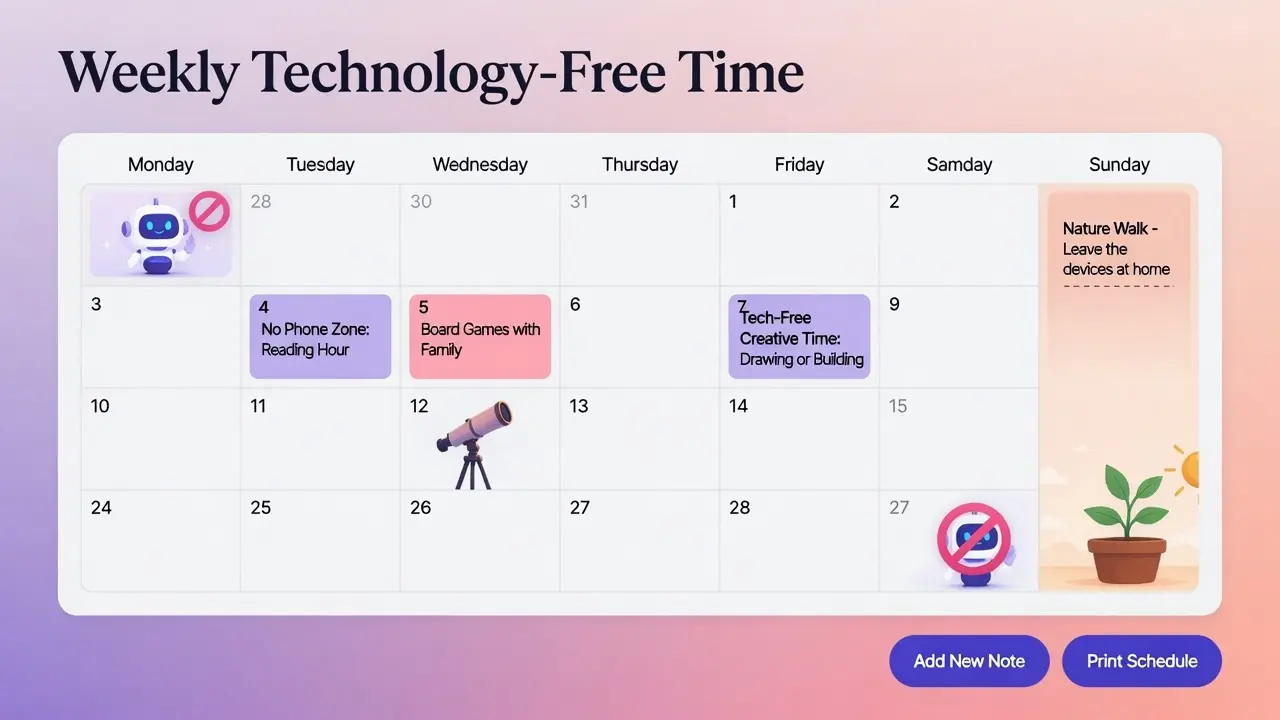
Sit down with your child to build a visual schedule for the week. This should include non-negotiable blocks like meals, family time, and household tasks, as well as their own chosen activities. Once these are set, identify the remaining space that can be dedicated to screen time. By putting this on paper or a digital calendar they can access, you provide them with a clear roadmap of their day. They stop asking, Can I play now? and instead check the schedule to see when their planned time occurs.
Incorporating Productive Screen Time
Not all digital activity is the same. Differentiate between passive watching and active creation. A realistic plan accounts for the difference between a child mindlessly scrolling through videos and one using a tablet to edit photos or learn a new design skill. You might allow more time for creative projects while restricting passive entertainment to a shorter window. Explain to your child why you distinguish between these activities. Help them recognize that creative use feels different and leaves them feeling more satisfied than passive watching.
The Logic of Natural Consequences
What happens when the plan is not followed? If the screen time is treated as a privilege earned through participation in the broader family schedule, the consequence for skipping a chore or ignoring an agreed-upon time is simply the delay or reduction of their digital access. Do not lecture. Simply state, You did not complete your morning activity, so your gaming time will be moved to later. This reinforces the idea that their time is their own to manage, provided they meet the basic requirements of the household.
Adjusting as the Summer Progresses
A plan is not a static document. As the summer progresses, you might find that some activities lose their appeal or that the child has new interests. Review the plan every two weeks. Ask your 9-year-old, How is the current schedule working for you? Is there anything you want to change? This gives them a sense of ownership. If they see that the plan is flexible, they are more likely to treat it as a serious agreement rather than a set of rules meant to be broken.
Building Long-Term Digital Responsibility
Managing screen time at age 9 is less about the hours themselves and more about the habit of self-monitoring. Your goal is to help them learn how to notice when they are becoming distracted, lethargic, or disengaged from their physical surroundings. Encourage them to observe how they feel after different types of digital play. This develops the internal awareness they will need as they grow older and have even more control over their own digital environment. By treating them as a partner in this planning, you teach them to treat their own time with the same respect you would.