
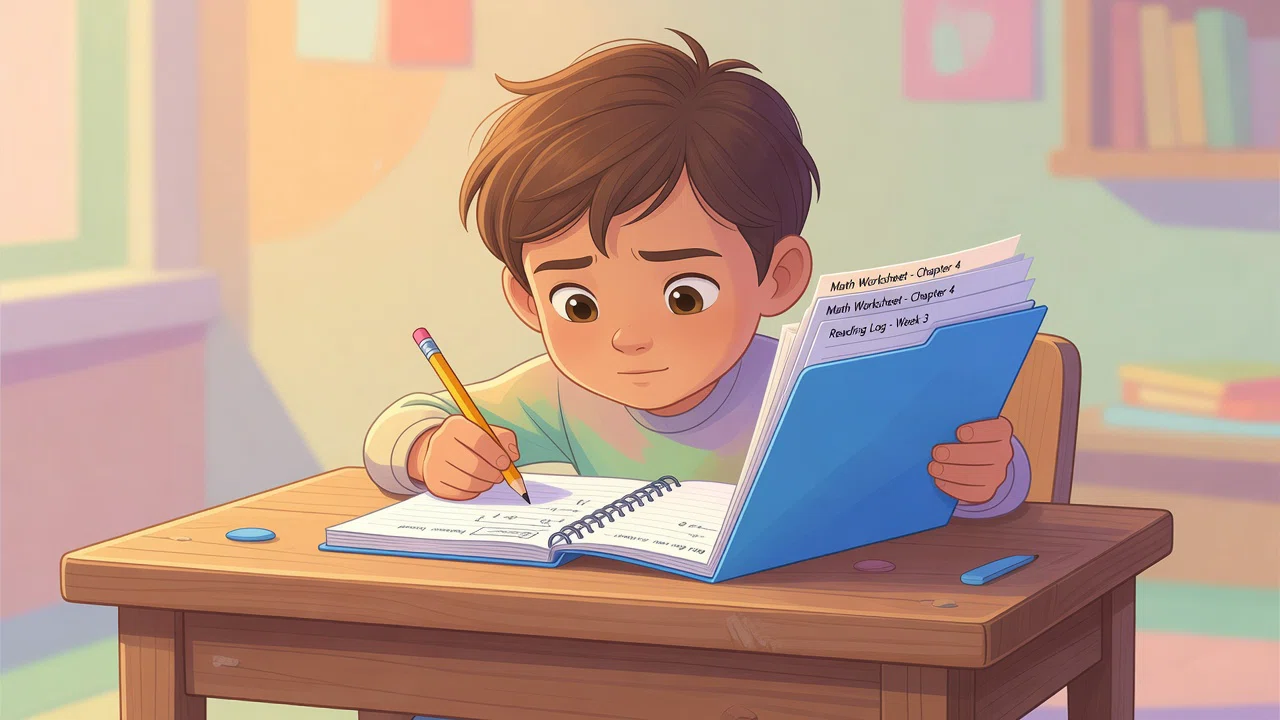
A Back-to-School Homework Routine for a 4th Grader
A back-to-school homework routine for a 4th grader works best when it answers three questions before anyone is tired: When does homework begin? Where do materials go? What should your child do when they are stuck? A predictable answer reduces the daily negotiation that can make a short assignment feel much bigger.
Fourth graders can begin to manage an assignment list and work in short, focused stretches, but they still need adults to help design the system. The parent’s job is to make the routine clear and notice patterns. The child’s job is to use the routine, make choices within it, and communicate when something is difficult.
Start with a realistic after-school reset
Many children need food, movement, or quiet time after a full school day. Starting homework the moment they walk in may work for one child and lead to a fight for another. Choose a consistent reset period that fits your family, such as a snack and 20 minutes outside, followed by homework before screens or activities.
Name the sequence instead of relying on a clock alone: "Home, snack, backpack check, homework, then free time." A visual schedule can help during the first weeks. If sports or care arrangements make the timing different on certain days, create a second version rather than treating those days as a failure of the regular routine.
The right routine is one your family can repeat most school nights. A 20-minute start time that happens is more useful than a perfect hour-long plan that begins after everyone is frustrated.
Create one place for school papers and supplies
Lost materials are often mistaken for homework avoidance. Give your fourth grader a consistent landing place for their backpack, a folder for papers that need attention, and a small container with pencils, eraser, and any basic supplies. The location does not need to be a dedicated desk. A cleared section of the kitchen table can work well if it is prepared before homework begins.
At the start of the routine, have your child open the backpack and sort papers into three groups: work to do, work to return, and papers for a parent. Ask them to read the assignment list or planner aloud in their own words. This catches confusion early without turning you into the person who tracks every task.
If the school uses an online portal, look at it together only as needed. The purpose is to teach your child where assignments are recorded, not to create a second, parent-managed list that competes with the teacher’s system.
Use short work blocks and visible breaks
Fourth graders often do better with one assignment or a short block of work at a time. Try 15 to 20 minutes of focused work followed by a five-minute movement, water, or bathroom break. A simple timer makes the ending concrete.
Before each block, ask your child to choose a first task. Starting with a short or familiar assignment can create momentum; starting with the task due first may reduce the chance it is forgotten. There is no universal best order. After a week, ask, "Which order helped you finish without rushing?" and use what you learn.
During the block, stay available without sitting beside your child unless the assignment specifically needs support. Your presence can be reassuring, but completing every step together teaches that homework cannot begin without you.
Agree on what to do when homework feels hard
Homework can expose a gap in understanding, an unclear direction, fatigue, or a task that simply takes longer than expected. These causes need different responses. Teach a stop-and-check process before offering the answer.
A practical stuck plan
Ask your child to:
- Read the directions and underline what the task asks for.
- Try the first problem or sentence using class notes or an example.
- Mark the place that is confusing and say what they tried.
- Ask for a hint, not the finished answer.
You might respond with, "Show me the direction that tells you what comes next," or, "What did your teacher do in the example?" If the work remains beyond your child after a reasonable effort, write a brief note or have them tell the teacher the next day. Teachers need an accurate picture of what a student can do independently.
Avoid turning every hard problem into a long evening lesson. A calm record of where the task became difficult is often more useful than completing it perfectly with adult help.
End with a two-minute pack-up check
The final step prevents finished work from disappearing overnight. Have your child put papers in the return folder, place needed books in the backpack, and check the planner for anything due tomorrow. Then they can say the routine is complete.
At first, use a simple question: "What needs to be in your backpack for tomorrow?" Later, check only that the pack-up happened. If an assignment stays on the table, treat it as information about the system. Perhaps the return folder needs a brighter color, the routine is happening too late, or your child needs a reminder card at the work space.
Review the system weekly, not only after a problem
Pick a calm time once a week to look at the backpack, folders, and planner together. Remove old papers, replace supplies, and ask what part of homework felt easiest or hardest. This short review is also a chance to adjust for a new teacher expectation or activity schedule.
As the school year begins, focus on repeatable actions rather than perfect completed pages. A fourth grader who can unpack, choose a first task, use a stuck plan, and pack work to return is building a homework routine that makes increasing independence possible.