
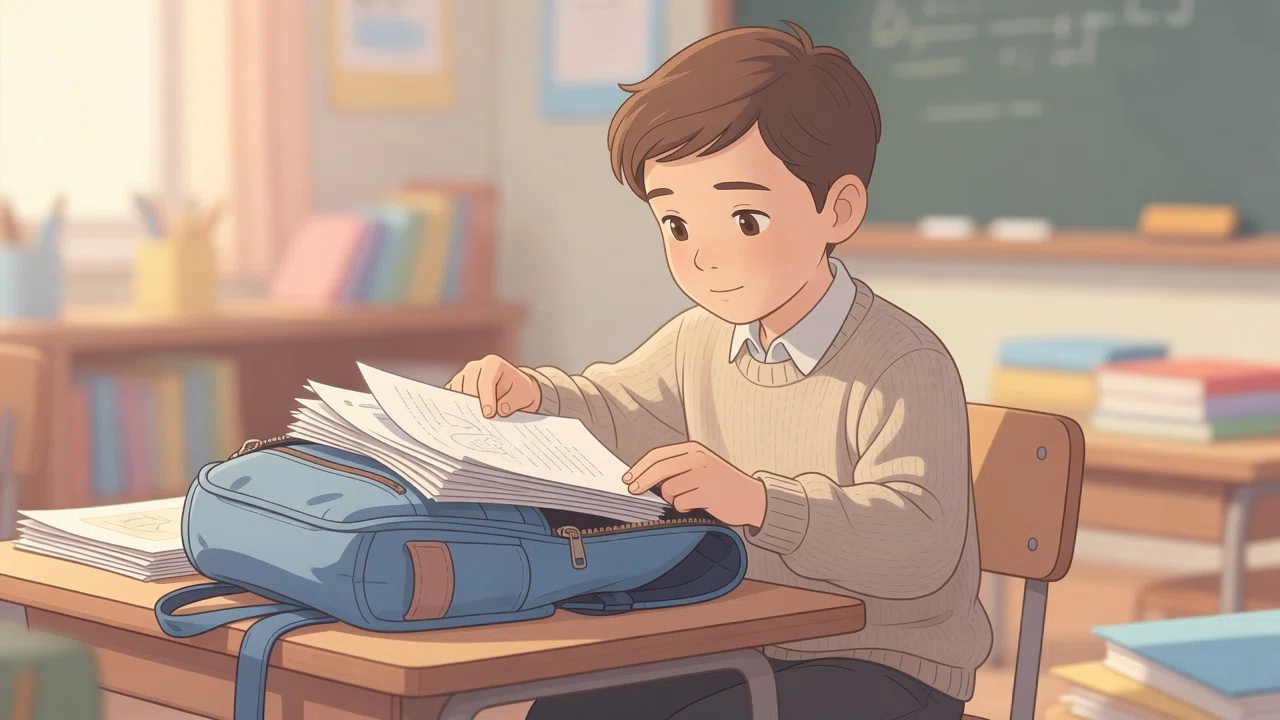
How to Organize an Elementary School Backpack
An elementary school backpack can become a small lost-and-found box by the end of one week. Crumpled papers, old snack wrappers, unfinished work, and a missing library book are usually not proof that a child is careless. They are signs that the backpack has no simple system.
To organize an elementary school backpack, begin with fewer categories, not more. A child needs to know where schoolwork goes, where items for home go, and how to reset the bag before the next day.
Start with what must travel
Empty the backpack with your child and sort the contents into three groups: things that stay at school, things that need to return to school, and things that are finished. This gives a child a way to see why an overfilled bag becomes difficult to use.
Ask simple questions while sorting. Does this paper need a parent signature? Is this homework for tomorrow? Does this folder have a purpose? Let your child make reasonable decisions, then correct only when needed. The point is to teach a process they can repeat, not to create a perfect backpack once for a parent to maintain.
Choose one home for return papers
Most lost-schoolwork problems improve when a child has one clearly marked folder for papers that must return. It can hold homework, notes for a teacher, library slips, and signed forms. The exact folder color matters less than using the same one every day.
Show your child the full path: a paper comes home, an adult sees it if needed, the paper goes into the return folder, and the folder goes back into the backpack. A paper on the kitchen counter has not finished its job. That is a natural cause-and-effect lesson, not a reason for blame.
Pack for tomorrow before bedtime
Morning is a poor time to search for a book or remember an art project. Build a brief backpack reset into the evening routine. Your child can check the return folder, put in any needed materials, fill a water bottle if that is your family routine, and place the bag near the door.
Keep the reset short. Ten focused minutes are more useful than an hour of reorganizing every pocket. If a child is tired, start with the most important question: what must be at school tomorrow? Other cleanup can wait.
Reduce what does not belong
Some children carry every paper because they fear throwing away something important. Others use the backpack as a place to store toys, collections, or food wrappers. Decide together what belongs in the bag on a school day and what does not.
Do not make the rule mysterious. Explain that extra items make it harder to find school materials and can make the bag uncomfortable to carry. If your child wants to bring a special item, check the school rule and make a specific plan for it rather than letting the backpack become storage.
Give your child a weekly cleanout
A daily reset handles urgent items. A weekly cleanout handles the buildup. Choose a predictable day, such as Friday afternoon or Sunday evening, and let your child empty the backpack. Recycle finished papers, return borrowed items, and decide what needs a parent’s attention.
This is also a good time to notice a pattern. Are papers always ending up loose? Is the lunch container returning unwashed? Does the child need a separate pouch for pencils? Fix the part of the system that is failing instead of adding several new rules.
Use reminders as training wheels
At first, your child may need a prompt: "Have you done your backpack reset?" Over time, move from telling to asking. "What needs to happen before your backpack is ready?" A checklist near the door can help a younger child remember without waiting for a parent.
If something is forgotten, stay calm. Help your child trace what happened and decide on one adjustment. Maybe the library book needs a permanent spot by the door. Maybe the return folder needs to be checked before screen time. A mistake is useful when it improves tomorrow’s routine.
An organized elementary school backpack is not about making a child look efficient. It gives them a practical way to carry responsibilities between home and school. With one return folder, a short daily reset, and a regular cleanout, the backpack can become a tool your child knows how to manage.