
Self-Directed Summer Goals for a 6th Grader
At 11 or 12 years old, your 6th grader is cognitively capable of understanding long-term consequences, yet they still struggle with the day-to-day execution of complex tasks. This developmental gap makes summer break the perfect laboratory for teaching self-directed project management. Instead of you dictating their schedule, your role is to provide the infrastructure for them to define, track, and evaluate their own objectives.
Designing the Project Management System
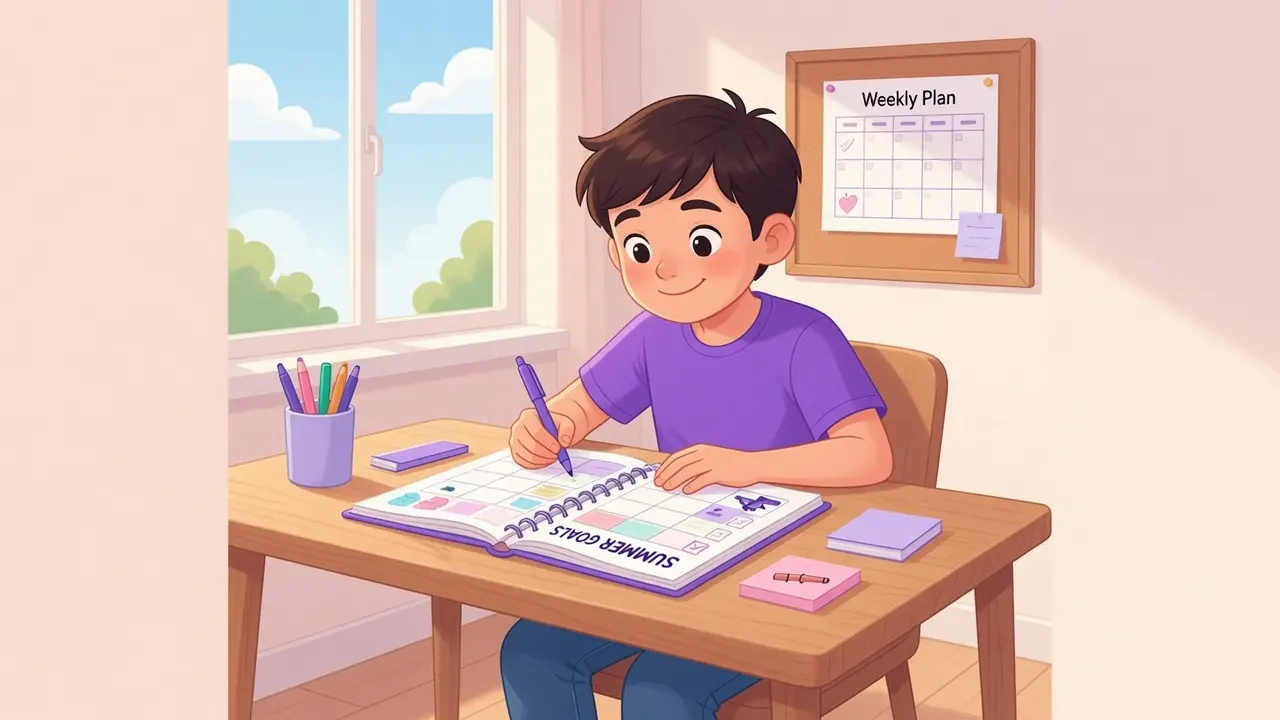
Do not hand your 6th grader a pre-printed calendar and expect them to follow it. They must build the tracking system themselves. Whether they prefer a physical kanban board on their wall or a simple digital spreadsheet, the requirement is that they design the tool based on their specific needs.
Essential Management Components
- The Project Scope: Have them define three primary goals for the summer. These should be concrete and measurable, such as 'learn to bake three recipes' or 'read five specific books' rather than 'be productive.'
- Task Breakdown: Force them to decompose each goal into small, actionable steps. If their goal is to learn three recipes, their steps should include finding a recipe, listing ingredients, shopping, and preparing the meal.
- The Review Cadence: Establish a weekly review meeting. This is not a progress report for you to grade; it is a session where the child explains what they achieved and, more importantly, where they encountered friction.
- Challenge: How do you handle it when they fail to meet their own weekly milestone?
- Parent Action: Use the '5 Whys' method. Ask them to explain the chain of events that led to the task not being finished. Was it a lack of time, a lack of resources, or a lack of clarity in the step definition?
- Assessment: The child is successfully self-directing when they can independently identify the cause of their stagnation and adjust their plan for the following week.
Managing Executive Function Challenges
A common issue for a 6th grader is 'task paralysis' when faced with a large project. They see the entire mountain and do not know where to start. When they express feeling overwhelmed, resist the urge to assign the next step. Ask them what the smallest possible unit of work is. By framing the project as a series of small, low-stakes decisions, you help them navigate their own executive function limitations.
If they are stuck for more than 45 minutes, require them to document why. Are they waiting for your input? Are they unsure of the materials? By forcing them to articulate the obstacle, you remove the emotional burden of the task and replace it with a logical problem to solve.
Reflection and Iteration
By the end of the summer, conduct a final review. Do not focus on whether they hit every single goal. Focus on the accuracy of their planning. Did they consistently underestimate how long tasks took? Did they pick goals that were disconnected from their actual interests?
This period of self-management provides a clear data set for your child to understand their own work habits. If they failed to achieve their goals because their plan was unrealistic, that is a successful lesson in the necessity of buffer time and realistic estimation. If they hit their goals easily, challenge them to define more complex projects for the next break. This approach builds the competence they need to tackle independent study in middle school and beyond.