
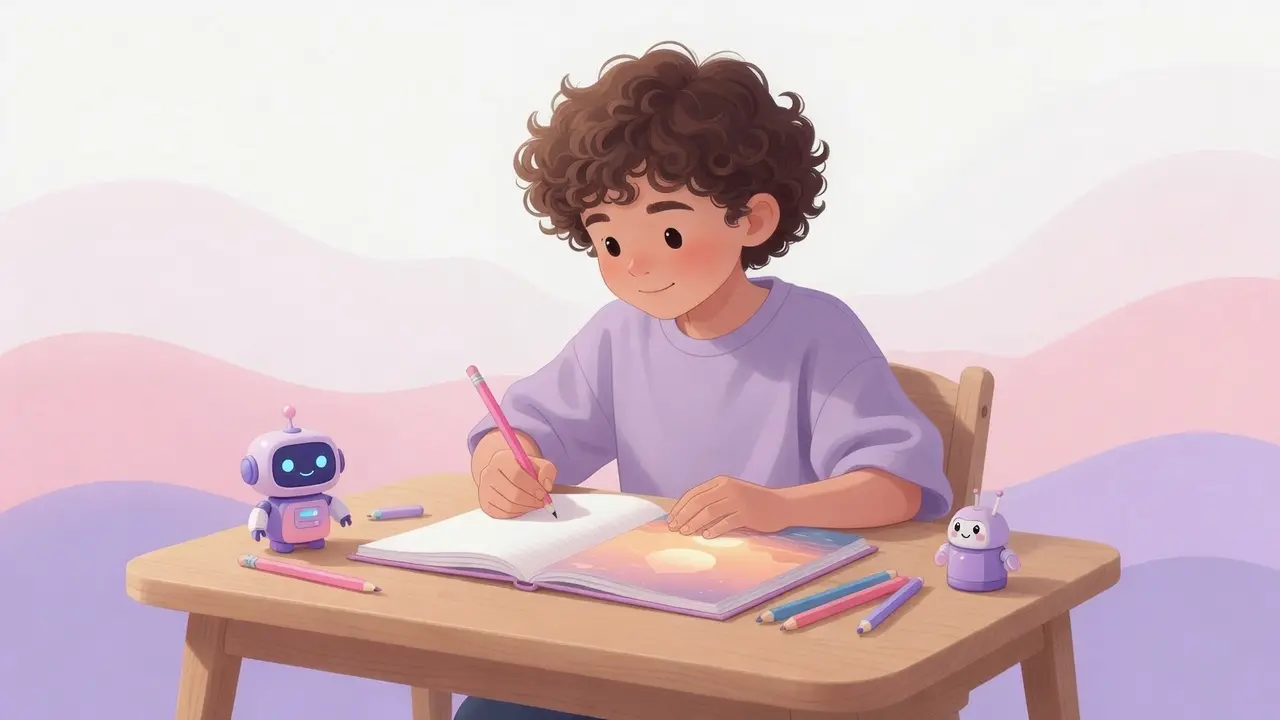
Summer Journaling for Your 2nd Grader
The Writing Habit at Seven
At seven or eight years old, a 2nd grader is mastering the mechanics of sentence construction, including capitalization, punctuation, and basic narrative flow. Maintaining this progress over the summer does not require rigid workbooks. Instead, you can encourage daily writing through a low-stakes journaling practice. This habit keeps their skills sharp while helping them realize that writing is a powerful tool for recording their own experiences and observations.
Establishing a Daily Routine
To make journaling a success, keep it simple and consistent. Provide a dedicated notebook and a comfortable space where they can write for ten minutes each day. The goal is fluency and confidence rather than perfect spelling or complex grammar. When your child writes, focus on their effort to convey a specific idea or describe an event accurately. If you notice persistent mechanical errors, mark them for later discussion, but do not interrupt the flow of their writing.
Using Descriptive Prompts for Daily Entries
Avoid generic prompts like "what did you do today." Instead, offer specific challenges that require descriptive language. Ask them to describe one sound they heard, one smell they encountered, or one object they saw in the garden. By narrowing the scope, you help them focus on word choice and sentence variety. For instance, ask them to write a sentence describing a beetle using at least three adjectives. This trains them to move beyond basic vocabulary and start using more expressive language.
Creating a Summer Observation Log
Turn their journal into an observation log. Encourage them to record changes they see in their environment, such as the growth of a plant or the changing behavior of local wildlife. Have them note the date, a brief description, and a prediction for what they expect to see the next day. This introduces the concept of narrative record-keeping and scientific observation. They will learn that their writing has a purpose beyond just completing a school assignment.
Collaborative Editing and Refinement
Once a week, sit down with your child to review their journal. Do not rewrite their entries; instead, ask them to identify one sentence that they think is their best work and explain why. If they have written a sentence that is confusing, ask them to read it aloud. They will often recognize the ambiguity themselves and be able to clarify the meaning. This collaborative approach shifts the responsibility of quality control to the child, which is a critical developmental step in becoming an independent writer.
Turning Journaling into a Story
Toward the end of the summer, look back through the journal together. Use their entries as the basis for a longer story. If they wrote about a trip to the beach in July and a storm in August, ask them to weave these two entries into a single narrative. This exercise teaches them that their daily writing can be structured and connected to form a larger piece of work. It demonstrates the value of documentation and helps them see themselves as authors of their own summer history.
By keeping the pressure low and the focus on purposeful expression, you will ensure your 2nd grader retains their writing skills while building a positive relationship with the written word.