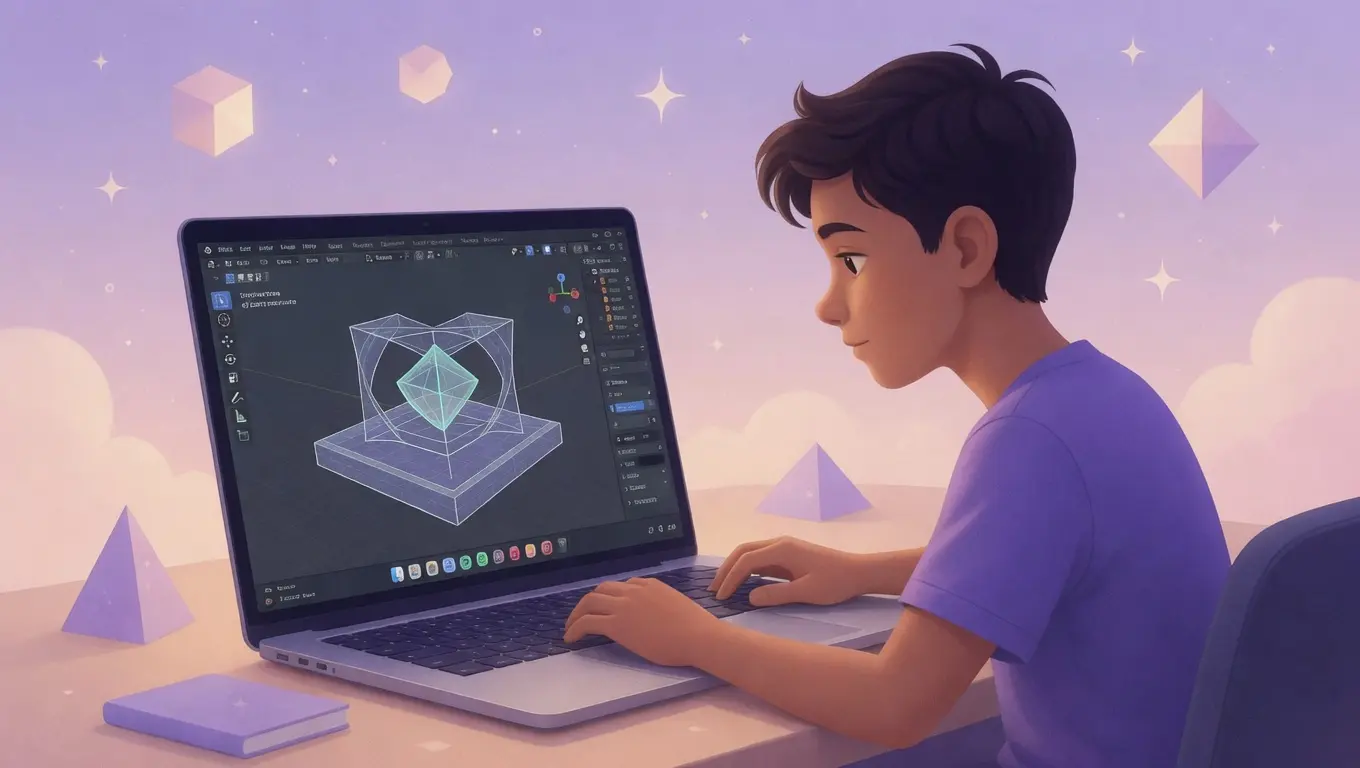

8th Grader Learning 3D Design and Modeling
The Shift from Consumer to Creator
For an 8th grader, the digital world is often a landscape for consumption. Learning 3D design and modeling pivots this dynamic, requiring them to engage with spatial reasoning, geometry, and structural logic. This summer, move your child from being a passive user of digital environments to an active architect of their own designs. The transition from a two-dimensional sketch to a three-dimensional model offers a concrete way to practice persistence and analytical thinking.
Choosing the Right Modeling Environment
Avoid the trap of overwhelming them with industry-standard software that prioritizes complexity over clarity. At this developmental stage, the goal is immediate feedback. Tools like Tinkercad provide a browser-based, intuitive interface that rewards curiosity, while slightly more advanced platforms like Blender or Fusion 360 allow for deeper exploration as they become comfortable. Sit with them to explore the interface, but let them choose the initial project. If they are interested in gaming, maybe they model a custom character component. If they like architecture, they might design a modular bridge system.
Fostering Spatial Reasoning and Problem-Solving
3D modeling is essentially a series of small, solvable problems. If they want to create a functional hinge, they must understand how parts rotate around a common axis. If they try to build a tall tower, they quickly learn about the physics of center-of-gravity and structural support. When they face a model that refuses to render or a design that defies gravity, resist the urge to debug the software for them. Ask questions about the design geometry instead. Can you explain why this corner is failing? What happens to the structural integrity if you change this base width?
By framing failure as a missing variable in their model rather than a character flaw, you allow them to engage in rigorous troubleshooting. This helps them understand that complex systems are built on manageable, logical steps.
Balancing Screen Time with Physical Realization
One of the most effective ways to make 3D modeling feel real is to move it into the physical world. If access to a 3D printer is available, help them navigate the constraints of slicing software. If not, encourage them to document their models in a virtual gallery or use them in digital projects. This helps them move past the limitation of a screen, emphasizing that their design has utility and purpose beyond the monitor.
Set specific time blocks for their modeling sessions. Because 8th graders often lose track of time when deep in creative tasks, encourage them to use timers. This structure helps them manage their own energy and ensures the summer does not become solely a screen-based endeavor.
Practical Steps for Parents
- Facilitate a demo day once a week where your child explains one specific tool or modeling technique they learned. The act of teaching reinforces their own understanding.
- Help them define a project theme for the summer. Maybe it is a full 3D printed board game or a series of custom household organizer components. Having a final goal keeps them focused.
- Encourage the use of online design forums specifically for their software. Guide them in searching for how others solved similar modeling challenges, teaching them how to use documentation effectively.
- Treat their mistakes as data. If a model fails to print or renders incorrectly, encourage them to write down the variable they changed and the result. This transforms the work into an empirical process.
The Long-Term Benefit of Design Competence
Modeling is not just about the software. It is about understanding how to translate an abstract thought into a workable digital object. By supporting your 8th grader as they tackle 3D design, you provide them with a language for logical expression. Regardless of their future path, the ability to visualize and iterate will prove essential. As the summer progresses, you will likely see their confidence grow, not through praise, but through the observable success of building increasingly complex objects.