Charlotte Mason vs. Classical Homeschooling: How to Choose
Choosing between Charlotte Mason and Classical homeschooling isn't a contest between a 'gentle' education and a 'serious' one. It is simply a question of family rhythm. Both approaches can give children rich ideas, strong habits, and real knowledge. The difference is where a parent puts structure. Charlotte Mason families often build lessons around living books, narration, short focused work, nature study, and steady habits. Classical families often begin with a planned sequence of knowledge, recurring review, memory work, and explicit practice.
The better choice is the one that solves the problem your household actually has. A parent who is exhausted from assembling every lesson may need more sequence. A child who remembers facts but cannot connect them to a real question may need more encounter, discussion, and application. Many families do not need to declare permanent loyalty to either label. They need a dependable plan for this term.
Name the family problem before comparing methods
Start with an ordinary Tuesday, not a catalog. What regularly breaks down?
- Do several children need a shared opening because separate plans consume the whole morning?
- Does a child resist a long written assignment but explain an idea clearly aloud?
- Is the family enjoying books and projects but unsure what knowledge has been covered or forgotten?
- Does a parent need independent work blocks, clear next steps, and a way to notice a missing prerequisite?
Those problems point to different decisions. Charlotte Mason practices can reduce unnecessary busywork and make attention to a person, place, object, or idea central. Classical structures can make coverage, review, and progression easier to see. Neither approach removes the parent’s need to observe the child. A beautiful narration is useful evidence, but it does not by itself show durable recall. A completed worksheet is useful evidence, but it does not by itself show understanding.
Keep one small record for two weeks: what the child did independently, what required a prompt, and what should return next week. That record will tell you more than a method label.
Compare the weekly rhythm, not the marketing language
A Charlotte Mason rhythm
A Charlotte Mason-style week often uses short lessons, a carefully chosen book or firsthand encounter, oral or written narration, and repeated attention to habits. The parent prepares fewer elaborate activities than many people assume, but preparation still matters. You need to select worthy material, protect a calm lesson length, listen to what the child says, and decide when an idea needs to return.
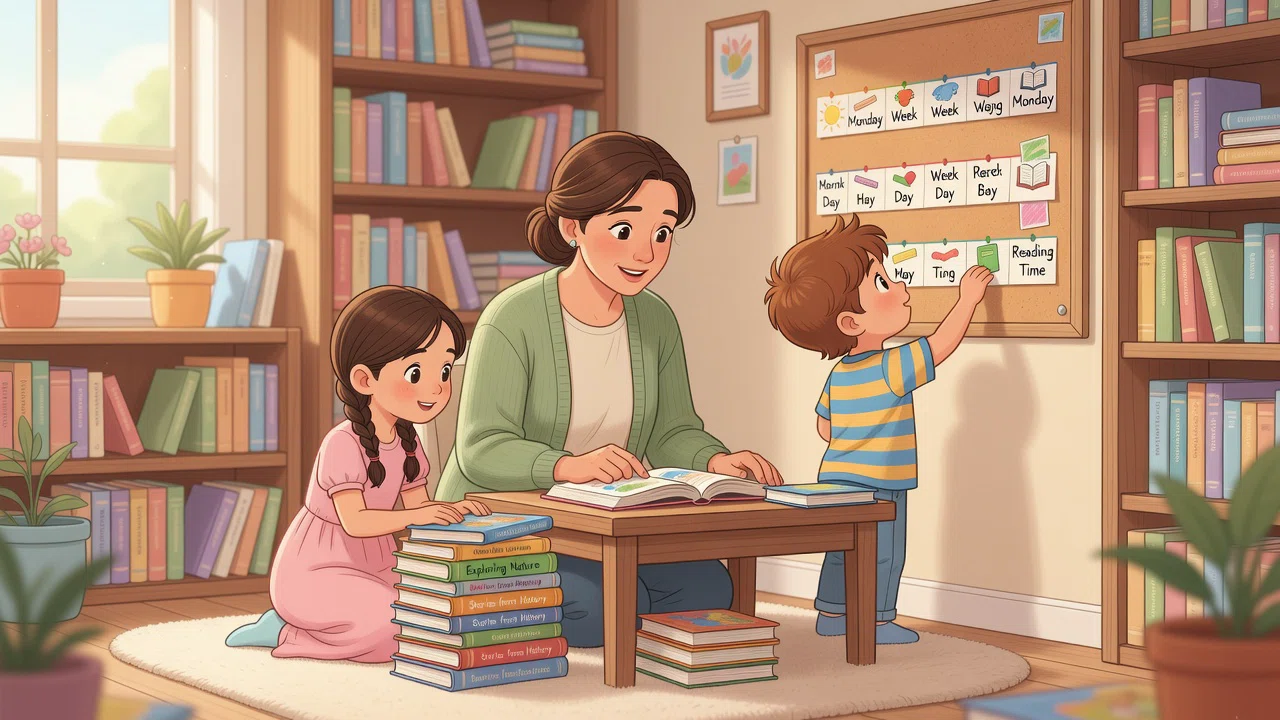
This rhythm works especially well when a child engages deeply with a story, image, object, or question and becomes inattentive during extended explanation. It can also work well in a mixed-age home because several children can begin with the same read-aloud, artwork, nature walk, or historical account. Their responses do not need to match. A younger child might narrate aloud while an older child writes a short response or compares two accounts.
Its risk is invisibility. Without a modest list of topics, skills, and returned work, a family can confuse an enjoyable morning with a complete plan. The remedy is not to turn every lesson into a test. It is to keep enough records to see what has been met, remembered, and postponed.
A classical rhythm
A classical-style week often makes the next step explicit. A parent may use a chronological history spine, a sequence of facts and vocabulary, guided recitation, cumulative review, and practice that builds toward a stated goal. This can make it easier to share responsibility with another caregiver, use an independent work period, or find the precise place where a child became stuck.
This rhythm helps when the household needs predictable starts and finishes. It is also useful when a parent wants to protect coverage across several subjects without rebuilding the plan each week. The trade-off is that a child can learn to complete assigned pieces without asking why they matter. Build in a short explanation, drawing, comparison, or application before adding more repetitions. If the child cannot explain a method, place an event in context, or use a term in a new example, change the representation before increasing the workload.
Let the subject change the practice, not the entire decision
You do not need three separate philosophies for history, math, and science. You do need to notice what each subject asks children to do.
History: connect people and events to time
Charlotte Mason practices can bring history alive through a strong narrative, oral narration, maps, and attention to particular people. Classical practices can make chronology, vocabulary, and recurring review more visible. Use both strengths when needed: read one engaging account, then ask the child to place it on a timeline, locate it on a map, and explain one cause or consequence. For an older elementary child, add a short comparison between a source and a retelling.
The decision is not living books versus facts. It is whether your current plan gives the child both a reason to care and enough sequence to understand where the story belongs.
Math: connect meaning to accurate practice
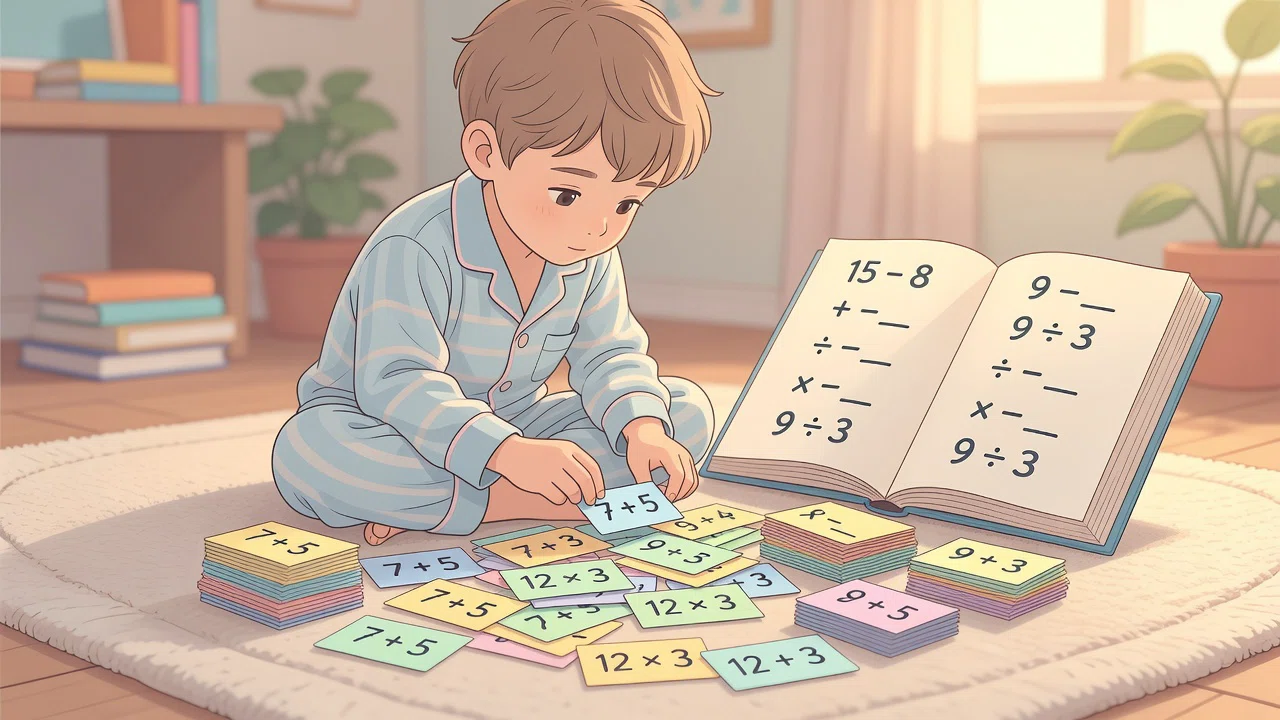
In math, a Charlotte Mason influence might mean a short lesson, careful attention to one idea, concrete objects, and an oral explanation before a long page of problems. A classical influence might mean a clear sequence of number facts, worked examples, procedures, and cumulative review. Families commonly need both.
Use a concrete model or a real problem when a child can copy a procedure without understanding it. Use a planned practice sequence when a child understands during conversation but cannot reliably carry out a method alone the next day. Check for transfer: can the child draw the strategy, explain why it works, and solve a slightly changed problem without a prompt?
Science: connect firsthand evidence to accurate explanation
Nature study gives children a reason to look closely, describe what they saw, and ask a question worth investigating. A knowledge sequence helps them return to key concepts, use terms accurately, and recognize when an explanation goes beyond the available evidence. An elementary science plan can begin with a field observation or a demonstration, then add a labeled sketch, a question, a simple model, and a later review.
Do not treat a pretty notebook page as proof that a child understands a scientific claim. Ask what changed, what was observed, what remains uncertain, and what evidence would help. That keeps firsthand attention and explicit knowledge working together.
Choose a record that fits your household
The right record is brief enough to keep and specific enough to guide the next lesson. For each child, keep a single page or simple list with three columns: introduced, secure, and revisit. Add the evidence that matters for the subject: a narration, a timeline card, a math problem explained without help, an observation with a question, or a vocabulary term used correctly.
For a Charlotte Mason-leaning family, this record protects coverage without making every lesson formal. For a classical-leaning family, it protects understanding by showing whether a child can do more than recite. For a blended family, it prevents the parent from holding the whole plan in memory.
Run a two-week trial before replacing everything
Do not replace every book after one difficult morning. Pick one subject and keep the time of day, lesson length, and child context fairly stable for two weeks. In the first week, use more Charlotte Mason practices: a short encounter, narration or observation, and one deliberate return. In the second week, use more classical practices: a stated objective, a clear sequence, and planned retrieval of earlier work.
At the end of each week, ask three questions:
- What could the child do without help?
- What did the child understand but fail to retain or apply?
- What preparation and supervision could the parent actually repeat during a busy week?
Choose the rhythm that gives you a workable next move. You may keep a classical sequence for math, use living books and narration for history, and make nature study the doorway into science. That is not inconsistency. It is using structure where structure helps and encounter where encounter helps.
Build a family approach you can sustain
Charlotte Mason vs Classical Homeschool becomes less confusing when you stop asking which label is purest. Ask whether your plan helps each child pay attention, remember important knowledge, practice needed skills, and show what they understand. Then make the next week slightly more workable.
Keep the parts that make learning visible. Add sequence where the family cannot see coverage or a child needs dependable review. Add stories, discussion, observation, and narration where the work has become mechanical. A sustainable homeschool approach is one your family can carry through an ordinary week and revise with clear evidence when it is not working.