Unit Studies vs. Traditional Homeschooling: How to Choose
Unit Studies vs Traditional Homeschool is not a choice between creative learning and serious learning. It is a choice about what will organize your family's week. Unit studies use one question, place, time period, or theme to connect several subjects. A traditional approach usually gives each subject its own sequence, materials, and regular lesson time. Either structure can lead to substantial learning. The better choice is the one that gives your children meaningful work while letting you see what they understand and keep up with ordinary family life.
Start by naming the problem you are trying to solve. Some families want fewer transitions and more shared learning. Others need a dependable next lesson, a record of coverage, or time for one child to work independently while a parent helps another. Those needs matter more than a curriculum label.
Decide what needs to organize the week
The first question is not whether a child likes projects. It is whether a shared theme or a subject-by-subject routine will make the next week more workable.
With unit studies, a topic supplies the structure. A family studying a local river might read its history, map its course, test water flow with simple materials, write a short explanation, and calculate distances. The work can feel connected because each activity returns to the same real question. A parent has to decide which learning goals belong in the unit and which do not.
With a traditional structure, the calendar supplies the structure. Math follows its next lesson, history follows a chronological course, and science follows its own sequence. That predictability can make preparation lighter and gaps easier to notice. The risk is treating subjects as boxes to complete instead of work a child can explain and use.
Neither format removes the need to observe learning. A finished poster, a completed workbook page, or an enthusiastic conversation is useful evidence, but not enough by itself. Ask a child to explain a choice, show an example, or apply an idea in a slightly different situation. Their answer tells you what should happen next.
When unit studies are a good fit
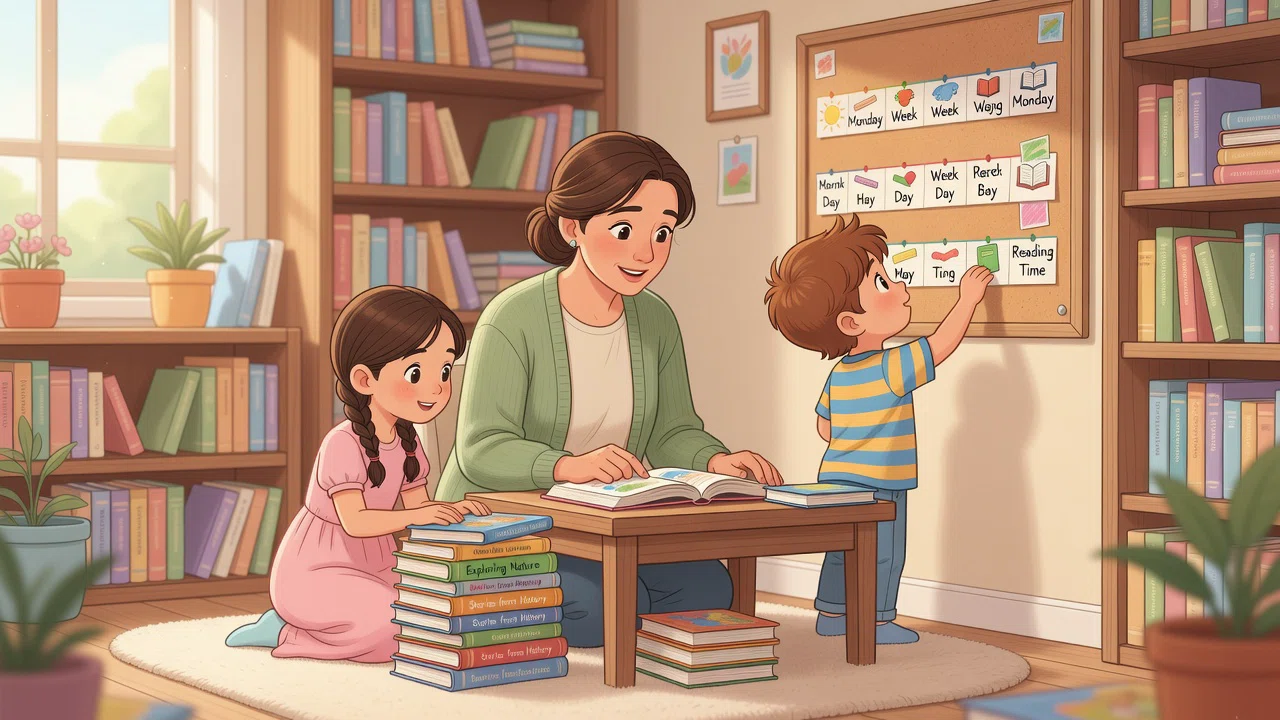
Unit studies tend to work best when a family has a question worth returning to across several days. They can also reduce the friction of teaching multiple elementary-age children separately.
Use one meaningful question, not a pile of activities
A good unit has a clear center. Instead of choosing “space” and collecting crafts, choose a question such as, “How do people know what is beyond Earth?” Read an age-appropriate book, look at a scale model, keep a short observation record of the moon, and ask children to support an explanation with something they saw or read.
The unit does not need to include every subject. Trying to force spelling, algebra, art, grammar, and science into one theme can make each task feel artificial. Give the theme a few jobs it does well, then keep other learning in its usual place.
Make mixed-age participation concrete
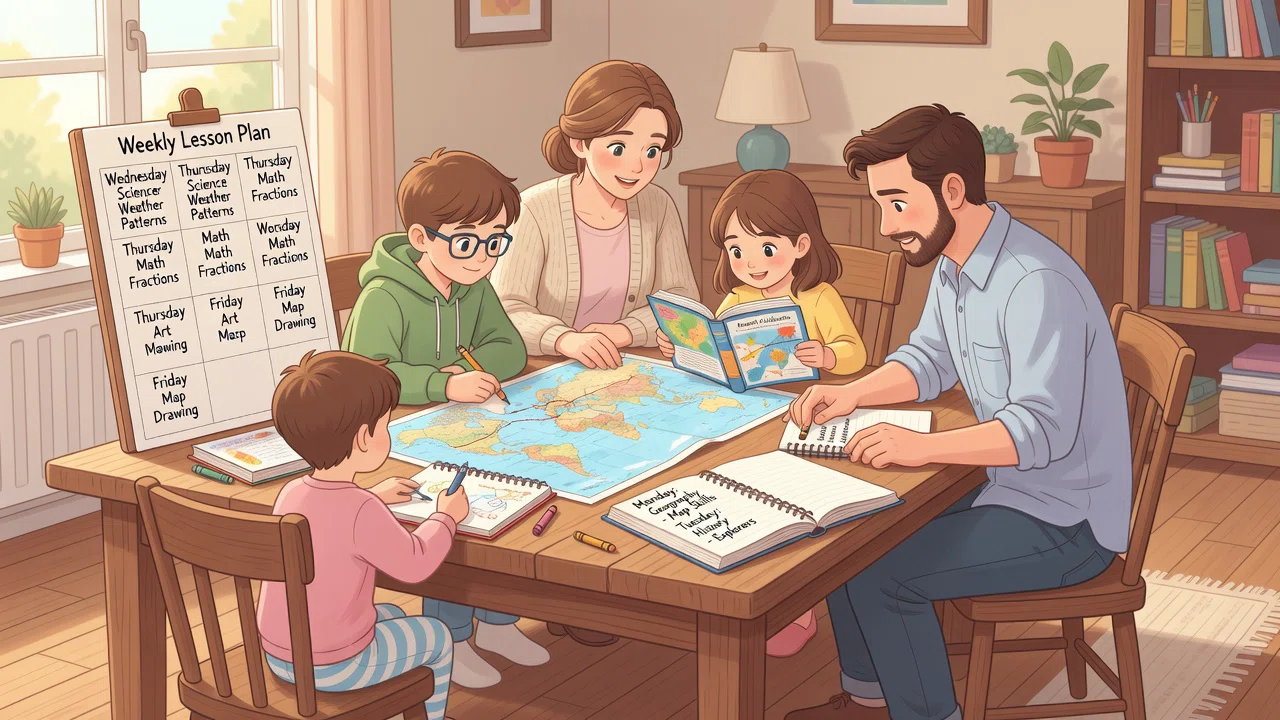
One shared opening can serve children of different ages when the response changes. After reading about a historical journey, a younger child might retell the route with picture cards. An older child might use a map scale, compare two accounts, or write a paragraph that distinguishes an observation from an inference. The shared experience is real, but the evidence of learning is age-appropriate.
This works only when each child has a small, clear task. “Make something about the topic” is vague. “Mark three stops on the map and tell why each mattered” gives a child a finish line and gives the parent something useful to assess.
Keep a light coverage record
Interest does not automatically create a complete foundation. Keep a simple list of ideas, skills, and sources used during a unit. A few lines after each week are enough: the question explored, the reading or investigation completed, and what each child could explain without prompting. That record helps you decide what to revisit and prevents a beloved topic from quietly crowding out everything else.
When a traditional structure is a good fit
Traditional homeschooling is often strongest when a family needs visible progression or routines that children can follow with less parent direction.
Make the next step visible
A sequence is especially useful in skills that build over time. In math, a child may need accurate practice with a new procedure before moving to a more complex one. In writing, regular work with sentences, paragraphs, and revision can make growth easier to see. A clear next lesson also helps when a parent is teaching several children or balancing homeschooling with work and appointments.
The structure should still leave room for thought. After a lesson, ask a child to model the idea, explain why an answer makes sense, or find it in daily life. If they can only repeat a procedure, slow down or show the idea another way before adding more practice.
Protect connection without abandoning the sequence
Traditional does not have to mean isolated. A history reading can lead to map work, a family conversation, or a library book. A science lesson can begin with a real observation before the vocabulary appears. The sequence remains the dependable spine; richer experiences make it easier for a child to remember why the lesson matters.
This approach is also useful for families who need independent work periods. Choose materials a child can begin alone, but build in a short check-in. Independent does not mean unseen. A five-minute conversation about what was confusing often prevents a week of quiet misunderstanding.
Compare the trade-offs in history and science
History and science make the difference between the structures especially visible, but they do not require separate curriculum decisions for every subject.
In history, a unit can help children see how geography, daily life, art, and political choices connect around a place or era. A chronological course makes the larger sequence visible and makes it easier to notice which periods have not yet been studied. Families can use a chronological spine while pausing for a rich unit when a topic invites deeper reading.
In science, a unit can give children time to observe a phenomenon, make predictions, collect evidence, and revise an explanation. A traditional course can ensure that investigations return to important concepts and accurate terms over time. In either structure, the central test is whether children can describe what they observed, what they think it means, and what evidence might change their mind.
The same pattern can guide other subjects. Let the organizing structure handle planning and coverage. Choose activities because they help a child learn, not because they make the curriculum look more integrated or more rigorous.
Try a limited experiment before changing everything
You do not need to replace your whole plan to learn which structure fits. Try a two-week unit alongside your usual math or writing routine, or use a more sequenced plan for one subject that has felt hard to manage. Keep lesson length and time of day reasonably consistent so you are comparing approaches rather than comparing a calm Monday with a rushed Friday.
After each lesson, note three things:
- What the child did without help.
- Where they needed a prompt or got stuck.
- Whether the work made the next step clearer.
Also assess the parent side. Was preparation reasonable? Did materials stay manageable? Could the plan survive errands, illness, or a demanding work week? A method that succeeds only when every day goes perfectly is not yet a dependable family routine.
Ask children for concrete feedback as well. “Which part helped you know what to do?” is more useful than “Did you like it?” A child may enjoy an activity and still need a clearer explanation, or dislike an assignment that is nevertheless building an important skill. Both pieces of information can guide a revision.
Build an intentional hybrid when it solves the real problem
Many families do not need to choose one permanent identity. They use a reliable sequence for math and foundational writing, then organize history, science, read-alouds, or seasonal projects around a unit. Others keep a topic-centered morning but use short daily practice to protect skills that need repetition.
The hybrid works when each part has a job. For example, a history timeline can protect chronological coverage while a two-week study of a migration story gives children time to examine maps, sources, and different experiences. A science notebook can preserve observations during a themed study without requiring every experiment to become a long project.
Avoid adding both structures in full. If you keep every separate subject lesson and also build elaborate units on top, the result can be more work without more learning. Remove or shorten something when you add something new.
Choose the structure that makes learning visible
Choose unit studies when a shared question will help your family focus, connect ideas, and learn together without hiding important skills. Choose a traditional structure when a steady progression, independent work, and clear coverage will solve a more immediate problem. Use both when each has a defined purpose.
Revisit the decision after several ordinary weeks, not after one especially good or difficult day. Keep the parts that help your children explain and use what they are learning. Change the parts that create unnecessary preparation or leave you unable to tell what comes next. That is how Unit Studies vs Traditional Homeschool becomes a practical planning decision instead of a curriculum label to defend.