Explore History With Your 6th Grader This Summer
Rethinking Historical Engagement
For a 6th grader, history is often presented as a fixed timeline of dates and names. This abstract approach can make it difficult for students to connect with the human experiences and complex causes underlying historical events. Summer break presents a perfect opportunity to move beyond memorization and toward the active practice of historical inquiry. Whether through travel or local museum visits, you can transform these experiences into laboratories for critical analysis.
The Role of the Historian
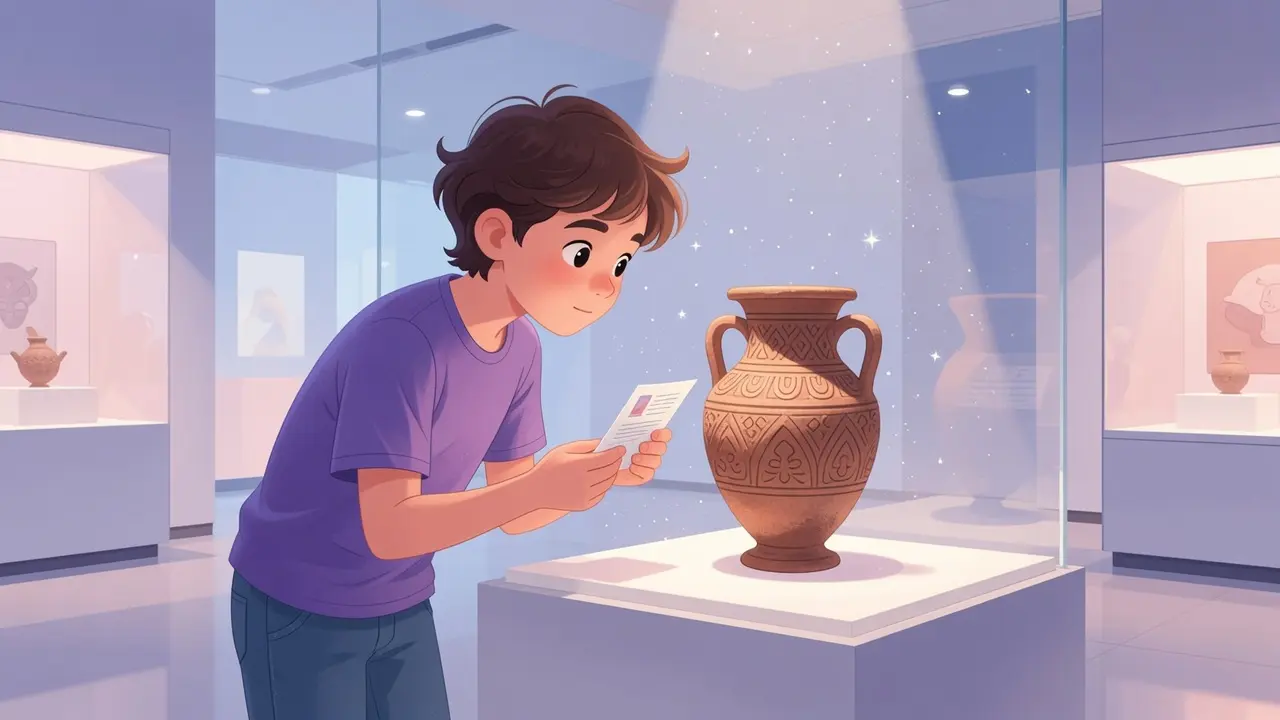
When visiting a museum or a historical site, challenge your 6th grader to take on the role of a historian rather than a passive observer. Instead of reading the placards and moving on, have them analyze the evidence. What does an artifact suggest about the daily life of the people who used it? How does the exhibit represent the perspective of the people involved?
Ask your child to find three artifacts and hypothesize what each reveals about the period's social structure or technology. By forcing them to form a theory based on physical evidence, you turn a walkthrough into a process of discovery. This is not about accepting the museum's narrative; it is about evaluating that narrative against the available evidence.
Questioning the Context
Every historical site or exhibit has a specific point of view. Use this to encourage critical thinking. When you visit a monument, a battle site, or an old city, ask your child to identify whose perspective is being elevated and whose might be missing. How would a different group have experienced this event?
This kind of questioning prevents them from seeing history as a single, objective truth. It forces them to consider the biases and limitations of historical record-keeping. By exploring these multiple perspectives, your 6th grader learns to handle the nuance of history and understands that a single event can be interpreted in vastly different ways depending on who is telling the story.
Comparative Chronology
If you are traveling, use the opportunity to compare different time periods or cultures. If your child is interested in a specific event or era, have them keep a travel journal where they map out what was happening elsewhere in the world at the same time. This helps them move beyond a narrow, isolated view of events and encourages them to consider the broader global context.
When visiting different historical sites, ask them to find themes that connect the two. Perhaps both sites deal with the impact of war, trade, or technological advancement. These thematic links make history tangible and show them that certain patterns repeat throughout human experience. It helps them build a mental map of how history connects, rather than just seeing it as a collection of isolated incidents.
Documenting the Exploration
Have your 6th grader act as a field researcher. Their journal should include not just descriptions, but their own arguments regarding the history they are experiencing. If they encounter a display that provides a claim, ask them to provide counter-evidence or to consider the limitations of the claim.
This active documentation makes their thinking visible. They must refine their own arguments as they interact with new information. This process of constantly updating their understanding as they encounter new evidence is the fundamental skill of any historian.
Final Thoughts
History exploration for a 6th grader is about understanding that the past is a subject for debate and interpretation, not a set of pre-determined conclusions. By treating your museum visits and summer travel as opportunities for active research, you give them the skills they need to evaluate evidence, consider different perspectives, and draw their own evidence-based conclusions. Keep the exploration concrete, focus on the evidence, and let their own curiosity drive the analysis.