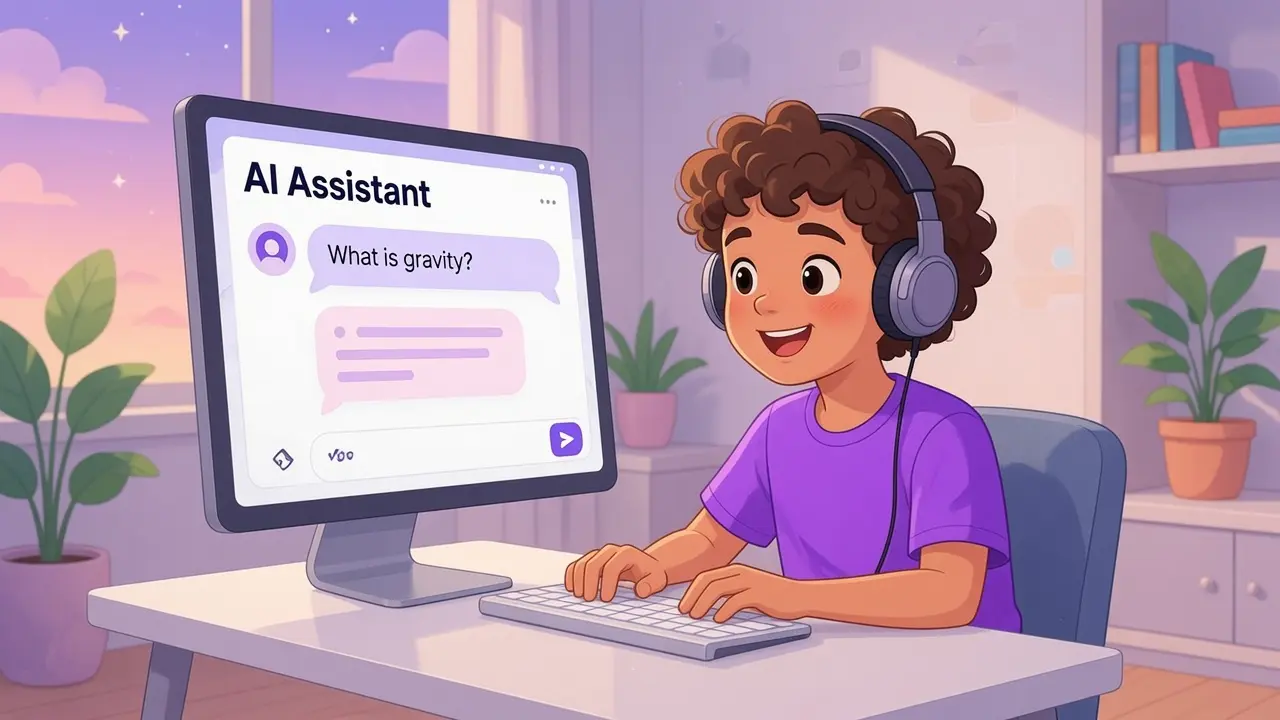

Intro to AI Prompt Engineering for a 6th Grader
At 11 or 12 years old, your 6th grader is perfectly positioned to move from being an AI user to being an AI operator. The core challenge for this age group is shifting from vague, conversational requests to logical, structured commands. Prompt engineering is not about learning code; it is about learning how to articulate a process. When a child learns how to communicate intent clearly to a language model, they are fundamentally exercising their own ability to sequence thoughts logically.
Establishing the Foundation
Avoid the trap of simply letting your child chat with an AI for fun. The goal is to treat the AI as a tool that requires specific instructions to perform a defined task. If you want your child to learn the structure of a good prompt, start by modeling the process yourself. Show them how an ambiguous request results in a generic response, and how a detailed request with constraints produces a specific output.
Practical Prompt Engineering Exercises
- The Roleplay Challenge: Ask your 6th grader to prompt the AI to act as an expert. For example: "You are an expert gardener who specializes in small vegetable patches. Tell me how to start a tomato plant in a container." Then ask them to modify the prompt by adding constraints: "Now, rewrite that for a 6th grader to understand, and limit the answer to five clear steps."
- The Data Extraction Task: Provide the child with a long, dense article. Ask them to prompt the AI to summarize it in three distinct ways: once for a toddler, once for a fellow 6th grader, and once as a professional technical report. This highlights how tone and structure change based on the audience.
- The Debugging Prompt: Give the AI a set of logical constraints for a story, but purposefully leave a gap. Ask the AI to write the story. Then, have the 6th grader identify why the story did not follow the constraints and how to fix the prompt to ensure it does.
- Challenge: How do you adjust the prompt when the AI misinterprets your intent?
- Parent Action: Ask your child to review the AI response and identify the exact sentence where it veered off course. Then, work together to rewrite that part of the prompt.
- Assessment: A child has grasped prompt engineering when they can identify and fix a 'hallucination' or logical error by adding a specific negative constraint to their prompt.
Iterative Refinement as a Skill
Prompt engineering is a cyclical process of testing and adjusting. A 6th grader often wants the first result to be the final one. You must teach them that professional results require multiple iterations. If the output is not what they wanted, encourage them to examine their prompt again. What missing context did the model need? Was there a specific instruction they forgot to include?
If they become frustrated, do not give them the solution. Ask them to explain what they asked for versus what they received. This forced explanation often reveals the gap in their logic. If the AI is being stubborn, have them define the 'style,' the 'format,' and the 'goal' separately. Breaking down the request into these categories helps them see how language models construct answers.
Maintaining Critical Distance
It is essential to remind your 6th grader that the AI is not a person and it does not 'know' anything. It is a probabilistic engine that predicts the next word. When they see the AI generate incorrect information, use that as a teaching moment for fact-checking. They should verify the AI's output with an external source. This builds a habit of healthy skepticism. By treating the AI as a sophisticated, yet fallible, tool, you equip your child to interact with future technology as an empowered designer rather than a passive recipient.