Making New Friends at Summer Camp for a 10-year-old
The Social Landscape of a 10-Year-Old
At age 10, children occupy a unique developmental bridge. They are moving away from the play patterns of early childhood and toward the more complex, status-aware dynamics of early adolescence. When a 10-year-old enters a new environment like a summer camp or a community pool, they face a specific set of challenges. They are often hyper-aware of social hierarchies and fear the vulnerability that comes with initiating contact with strangers.
Unlike younger children who may engage in parallel play, 10-year-olds seek validation and shared interests. Understanding this motivation is the first step in helping them navigate the long break. They are not just looking for someone to play with. They are looking for someone who understands their humor, their interests, and their social standing.
Preparing for the First Interaction
One common challenge for parents is the impulse to over-prepare or force social situations. A 10-year-old is quick to detect forced interaction and often responds with withdrawal. Instead of instructing them to go make friends, provide them with functional tools for approaching peers.
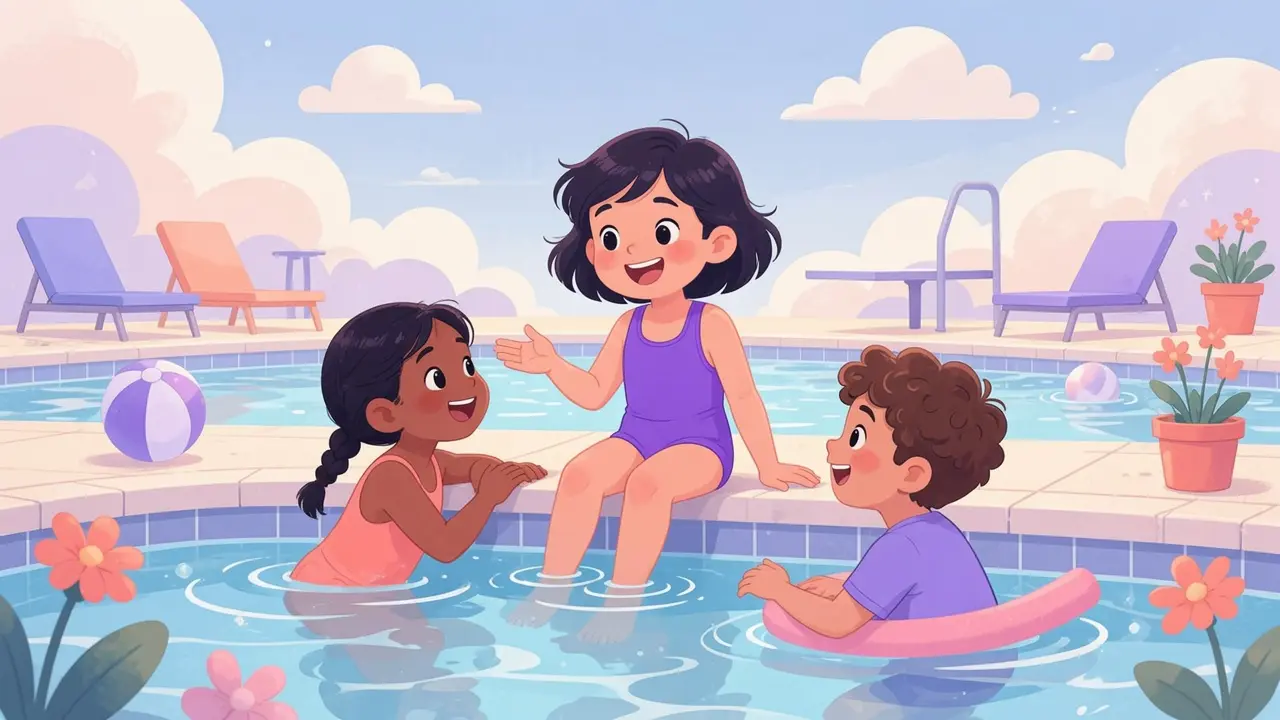
Start by discussing specific, low-stakes conversation starters. For example, at a community pool, a 10-year-old might notice someone else practicing a specific dive or wearing a t-shirt featuring a video game or hobby. Teaching them to comment on the activity or the item rather than the person reduces the pressure of the initial greeting. Suggest a specific phrase like, I noticed you have a shirt from that game, do you play it often? This approach is grounded in observational fact and allows the other child to respond based on their own interest.
Managing Rejection and Social Friction
It is inevitable that not every interaction will result in a friendship. A 10-year-old often interprets a lack of interest from a peer as a personal rejection. This is where parents can provide vital perspective. Help your child differentiate between a peer who is busy or uninterested and a peer who is being exclusionary.
If a child declines an invitation or is slow to respond, encourage your 10-year-old to observe the context. Are they in the middle of a game? Are they focused on their own friends? Framing this as an information gathering exercise rather than a moral failure keeps the child objective. They can learn to pivot to a different group or activity without internalizing the outcome.
Practical Activities for Building Connections
To facilitate genuine interaction, focus on activities that require collaboration but do not demand constant, intense focus on the other person. At the pool, activities like diving for rings or playing catch with a beach ball are ideal. These activities have clear rules and objectives, which provide a structure for the interaction. If the interaction fizzles out, the game itself provides an easy exit strategy.
At a summer camp, encourage your child to join groups centered on a specific project, such as building a raft or organizing a scavenger hunt. When the focus is on a shared goal, the social interaction becomes a secondary result of the activity. This reduces the anxiety of performance and allows the child to demonstrate their competence and personality naturally.
Reflecting on Social Progress
After a day at camp or the pool, engage in a debriefing session that avoids leading questions. Instead of asking, Did you make any friends?, ask, What was the most interesting interaction you had today? or Who were you working with on that project? These questions invite your 10-year-old to share their experience without feeling interrogated.
If your child describes a positive interaction, ask them what specific action they took that made them feel comfortable. If they describe a negative one, ask them to identify the cause-and-effect sequence of events. By consistently analyzing these interactions, your 10-year-old develops the social intelligence to navigate complex groups in the future. They learn that friendship is not a random occurrence, but a series of choices and responses that they can manage with practice and observation.
Ultimately, your role is to provide the space and the vocabulary for these experiences. As your 10-year-old gains confidence in initiating and sustaining conversations, the summer environment becomes a laboratory for social growth rather than a source of pressure. Keep your expectations aligned with their developmental stage, and support them as they learn the nuances of connecting with others on their own terms.