Safe Neighborhood Biking for Your 8-year-old
The Logic of Neighborhood Navigation
At eight years old, a child is ready to begin navigating familiar neighborhood routes, but they do not yet possess the advanced spatial awareness or split-second reaction times of an adult. Biking safely at this age is about transforming abstract traffic rules into a series of predictable, observable behaviors. The goal is to move the child from a passive rider who follows a parent to an active navigator who observes the road conditions independently.
Establishing Core Traffic Rules
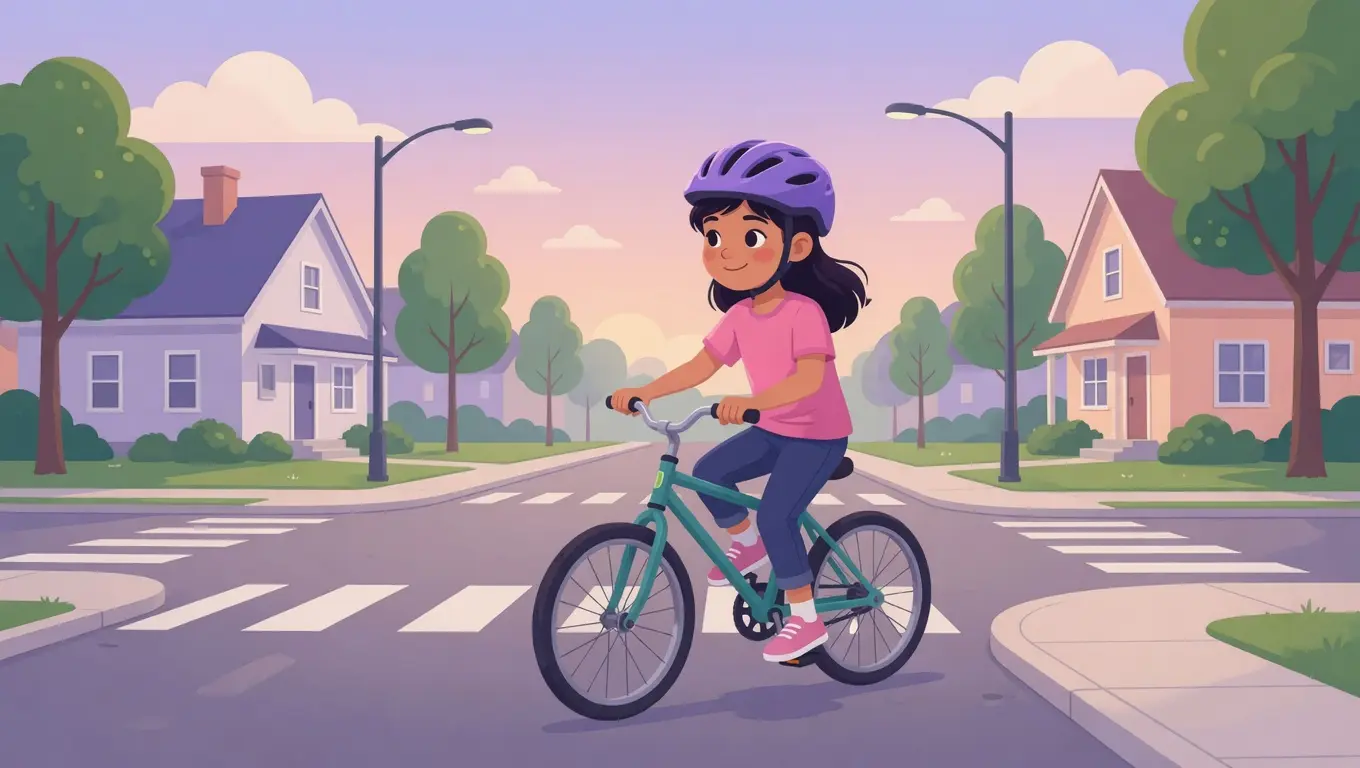
Do not rely on the hope that your child will simply figure out how to behave in traffic. Establish clear, binary rules that they can apply in any situation. Teach the child that at every intersection, they must stop, look left, look right, and look left again. This sequence is a physical habit that creates a necessary pause, allowing them to gather information before proceeding. Explain that these rules exist not because a parent says so, but because they provide the best opportunity to see and be seen by others who are also using the road.
Practicing Routes Together
Before allowing your 8-year-old to bike a route alone or with friends, practice that specific route together multiple times. As you ride, narrate your own decision-making process out loud. Say things like, I am looking to see if that car is slowing down before I cross the driveway, or I am stopping early at this stop sign so I can see clearly down the street. This verbal modeling helps the child understand that safe riding is a series of active observations rather than a passive act.
Developing Situational Awareness
One of the greatest challenges for an 8-year-old is maintaining focus on the road while being distracted by neighborhood activity. Practice identifying potential hazards during your rides. Point out hidden driveways, parked cars that might obscure a person walking, or surfaces that might be slippery. This does not mean instilling fear; it means equipping them with a toolset to judge information critically. By focusing on what they see, you help them understand the environment on their own terms.
Communicating with Other Road Users
Safety is a two-way street that relies on predictability. Teach your 8-year-old to use simple hand signals and to make eye contact with drivers when approaching an intersection. Knowing that a driver has seen them provides a higher level of certainty than simply hoping a driver will notice them. This action demonstrates competence through discovery, as they learn that their own communication directly influences the behavior of others in their environment.
Practical Steps for Parents
- Ensure high visibility. Always use a well-fitting helmet and attach lights to the bike, even for daytime riding. This is a non-negotiable standard that reinforces the importance of being visible.
- Conduct regular bike maintenance checks. Involve your child in checking tire pressure and brake function before every ride. This teaches them to take responsibility for their equipment and to ensure it is in safe working order.
- Create a gradual independence framework. Start by letting them lead the way while you ride behind them. Gradually increase the distance between you until they can navigate the entire route while you simply follow from a distance to observe their decision-making.
- Avoid absolute, preachy rules. Instead of saying, Never go past that tree, explain the geography of the route and why certain intersections are more complex to manage than others. Let them learn the boundaries of their current capability through your guidance.
Building Long-term Judgment
Your role is to foster an environment where your child can learn the nuances of road safety through deliberate practice. By teaching them to observe, communicate, and follow logical rules, you provide them with the foundation for safe, independent travel. Their confidence will grow not from following your lead blindly, but from their own ability to correctly judge the road environment and make safe decisions every time they get on their bike.