
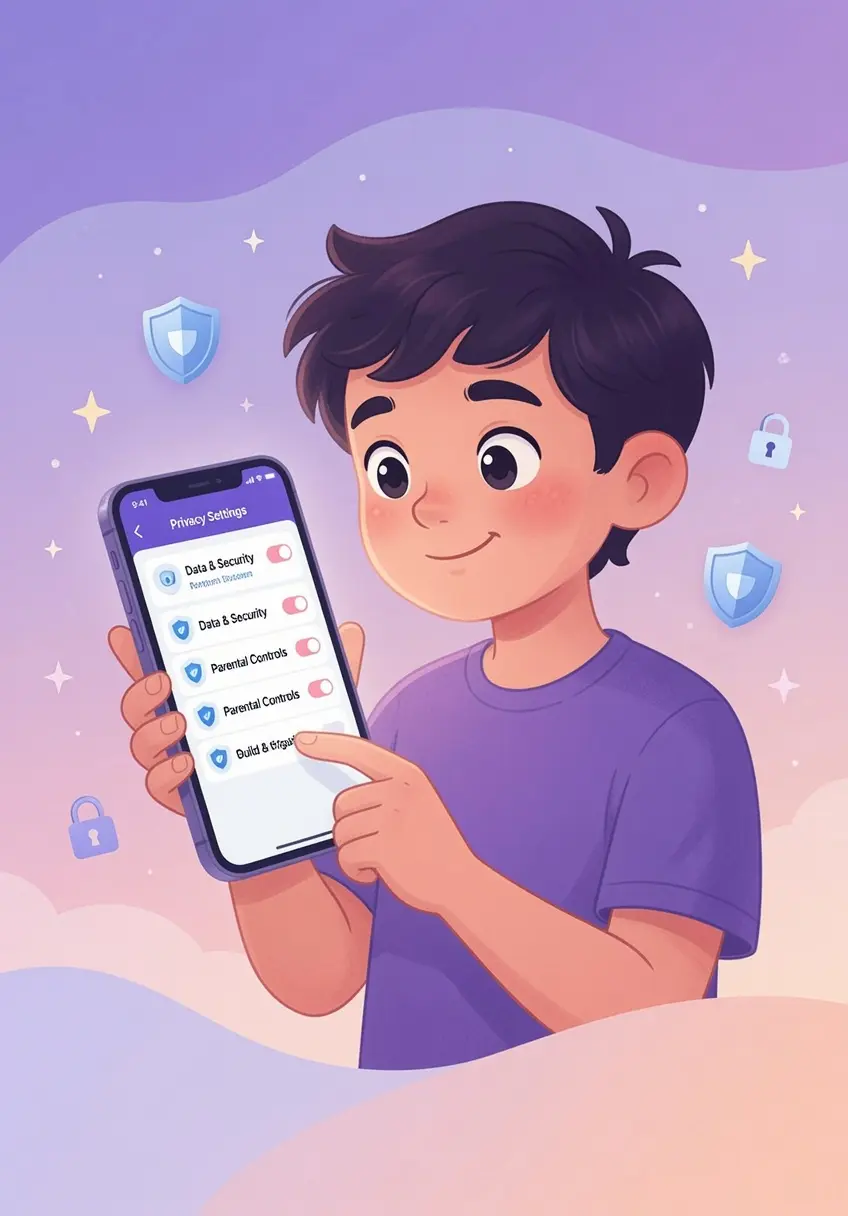
Auditing App Privacy for a 13-Year-Old Before Sleepovers
Preparing for Shared Digital Spaces
Summer sleepovers are a staple of the 13-year-old social experience. While these gatherings provide critical social bonding time, they often involve shared digital environments where privacy boundaries can blur quickly. Before your 13-year-old heads out, a proactive privacy audit is a necessary step to help them manage their digital footprint and maintain appropriate boundaries in a group setting.
The Privacy Audit Checklist
Treat this audit as a collaborative task rather than a policing measure. Use the following steps to review the devices and applications your child brings to social gatherings.
1. Location Sharing and Social Platforms
Many apps now feature persistent location sharing. Check if your 13-year-old has Snap Map, Find My, or similar features active. Discuss the potential consequences of broadcasting their location in real-time to a wider social network when their focus should be on the immediate group. Set a rule to disable location sharing during sleepover events.
2. App Permissions Review
Go through the installed apps on their device. Look specifically for apps that request access to the microphone, camera, contacts, and photo library. If an app does not require these permissions to function, disable them. This reduces the risk of accidental information sharing or unauthorized access during the chaotic, high-energy environment of a group sleepover.
3. Account Privacy Settings
Most social platforms offer granular privacy controls. Verify that your child’s profiles are set to private and that their follower lists are restricted to people they know personally. Explain that these settings are not about secrecy, but about limiting their exposure to unknown actors and protecting their personal data from being indexed or harvested.
Navigating Social Pressure During Sleepovers
At 13, the pressure to conform is intense. If your child’s peers are broadcasting their locations or sharing inappropriate content, your child may feel pressured to follow suit. Prepare them for these situations by role-playing potential responses. If a friend asks to see their phone or suggests opening a public social media stream, your child should have a neutral, prepared response ready, such as "I am keeping my phone private tonight to focus on the games."
Managing Conversations About Digital Behavior
Use this audit to talk about why privacy matters. Frame the discussion around the concept of digital permanence and identity management. Help them understand that once information or location data is released, they lose control over who sees it and how it is used. This objective perspective helps a 13-year-old make informed choices when faced with social pressure.
Establishing Post-Event Follow-up
After the sleepover, ask your child about their experience without interrogating them. Did they notice others struggling with digital distractions? Did they find it easy or hard to stick to the agreed-upon privacy settings? This follow-up reinforces that your goal is to help them gain competence, not to punish them. By engaging them in the audit and the subsequent reflection, you equip them to navigate the digital aspects of their social life with increased confidence and security.