
Back-to-School Morning Routine for Elementary School Kids
A school morning goes badly when too many decisions wait until everyone is already in a hurry. A missing shoe, an unfinished lunch, a backpack that was never packed, and a child who has not eaten can turn ten minutes into an argument. A back-to-school morning routine for elementary school kids works best when it moves those decisions earlier and gives a child jobs they can actually own.
The goal is not a perfect, silent house. The goal is a routine that helps everyone leave prepared without a parent repeating the same instruction six times.
Decide what must happen before leaving
Write down the few actions that matter on a school morning. For most families, that means getting dressed, eating, brushing teeth, gathering school items, and getting out the door. Keep the list short enough that your child can remember it.
Then decide which tasks belong the night before. Choosing clothes, packing the backpack, finding a library book, and signing papers are usually easier after dinner than at 7:30 in the morning. Explain the reason to your child: preparation gives the morning more room for breakfast, conversation, and unexpected problems.
Give your child a visible sequence
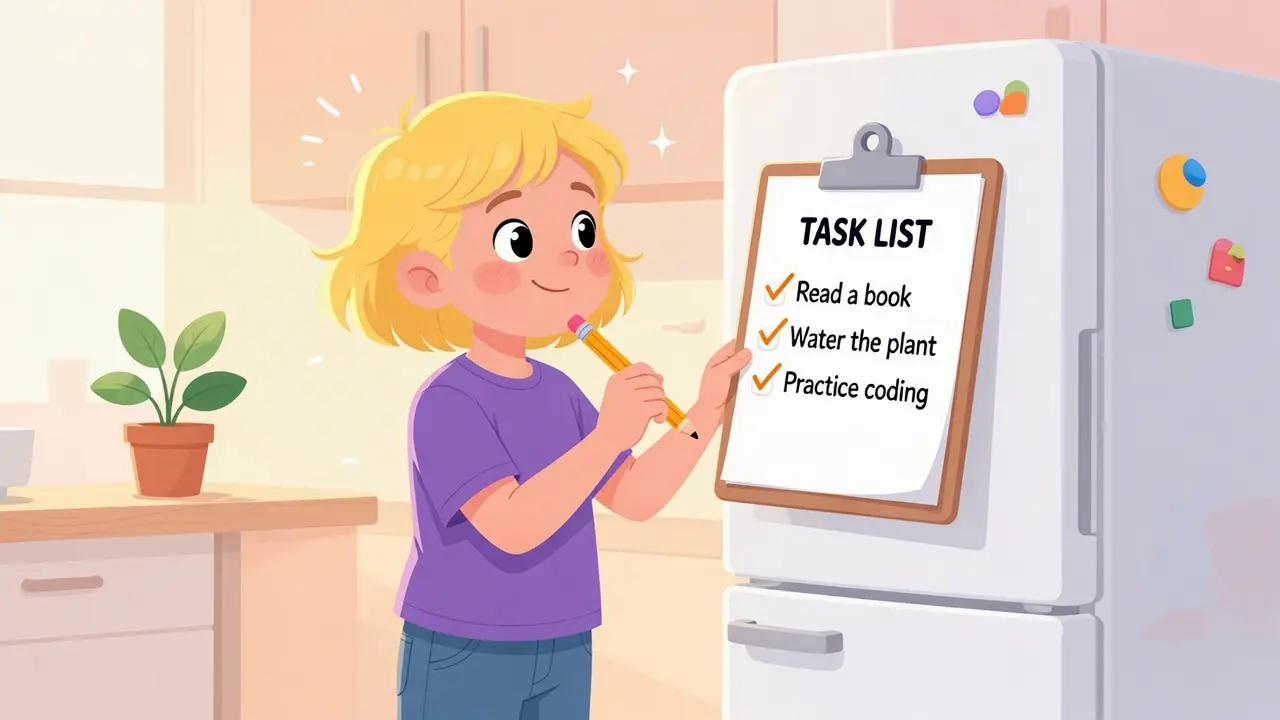
Young elementary school children often respond better to a sequence than to a stream of reminders. A simple list or picture chart near the place where everyone gets ready can show what comes next. Older children may prefer a written checklist or an alarm with their own labels.
Do not use the chart as a way to monitor every movement. Use it as a tool the child can consult without waiting for an adult. Ask, "What is next on your list?" instead of immediately telling them. That small change lets a child practice noticing and solving the next problem.
Make breakfast and clothes predictable
Breakfast does not need to be elaborate to be useful. Choose a few school-morning options that your family can repeat without much discussion. Keep commonly used items where a child can reach them safely. If a child wants a different breakfast, make that a conversation for the night before when there is time to plan.
Do the same with clothes. Let your child choose from weather-appropriate options the evening before. If they refuse the planned outfit in the morning, avoid a long debate unless comfort or safety is involved. A natural consequence may be that there is less time for a preferred activity before leaving.
Create one home for school items
Backpacks, lunch boxes, coats, and signed papers need a predictable location. A hook, basket, or small area by the door can prevent the daily search. At the end of the evening, your child can put the packed backpack and other needed items there.
If something is forgotten, treat it as information about the system. Did the item lack a home? Was packing started too late? Was the checklist ignored because it was too long? Fix the part that failed instead of turning one forgotten folder into a judgment about responsibility.
Leave margin for real life
A routine that works only when every minute goes perfectly will not last. Build in a small buffer before the time you need to leave. That margin is for a spilled drink, a last bathroom trip, or a child who needs help tying a shoe. It is not extra screen time that disappears the moment anything goes wrong.
If mornings are consistently tense, identify one bottleneck for the week. Perhaps everyone needs to wake ten minutes earlier. Perhaps the backpack reset needs to happen before bedtime. Change one thing, observe the result, and let your child see that routines can improve.
Teach the why, not just the rule
Children are more likely to participate when they understand how a routine helps them. Packing the backpack means less panic at school. Eating breakfast means more energy for the first class. Leaving on time means they can enter the classroom without feeling rushed.
Ask your child what makes mornings hard from their point of view. They may say the bathroom is crowded, they dislike a certain breakfast, or they cannot find their socks. Listen for a practical issue that can be solved together. Collaboration does not mean adults give up the schedule. It means the child learns that their observations can help build a workable family plan.
The best back-to-school morning routine is not the one with the most rules. It is the one your elementary school child can understand, practice, and gradually manage with less help.