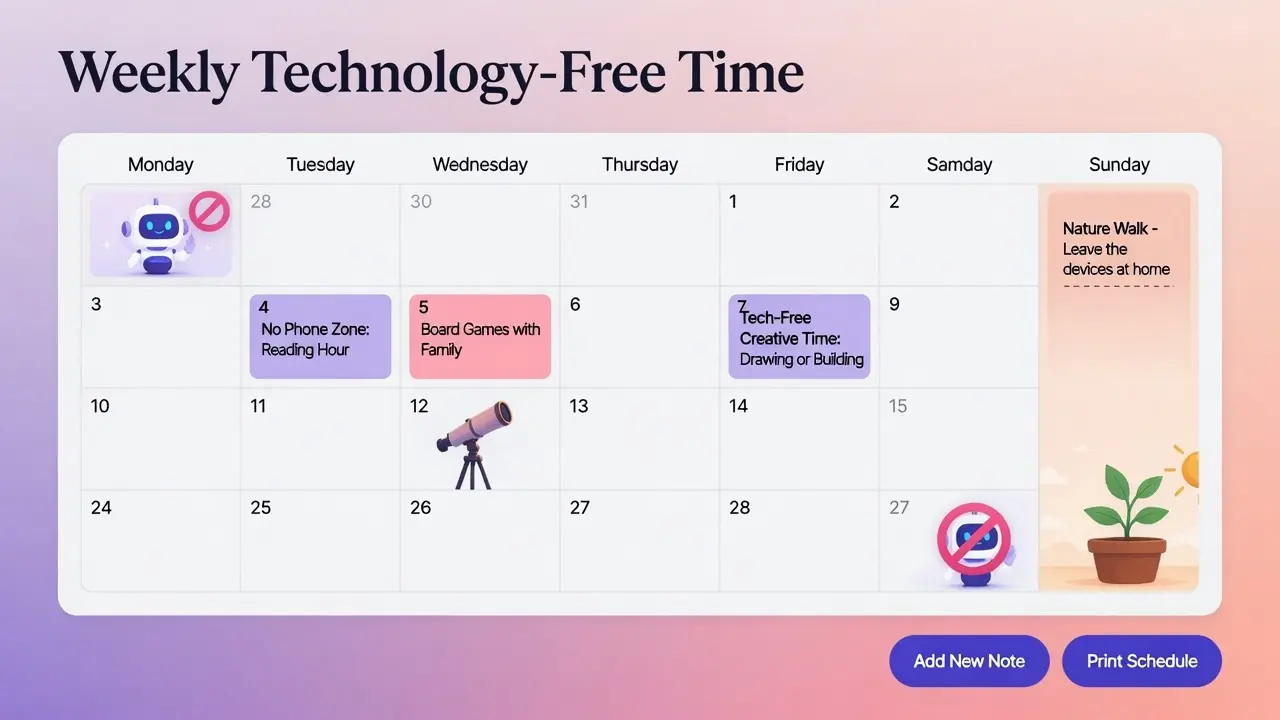
Creating a Summer Screen-Time Plan for an 8-year-old
The Need for Summer Structure
For an 8-year-old, the lack of school-day structure can quickly lead to an accumulation of aimless screen time. While the temptation is to let them decompress, an unstructured summer often results in less meaningful engagement and more irritability when it is time to log off. Building a realistic screen-time plan is not about imposing arbitrary restrictions but about creating a rhythm for the day that honors both their need for downtime and their need for varied, healthy activities.
Designing the Plan Together
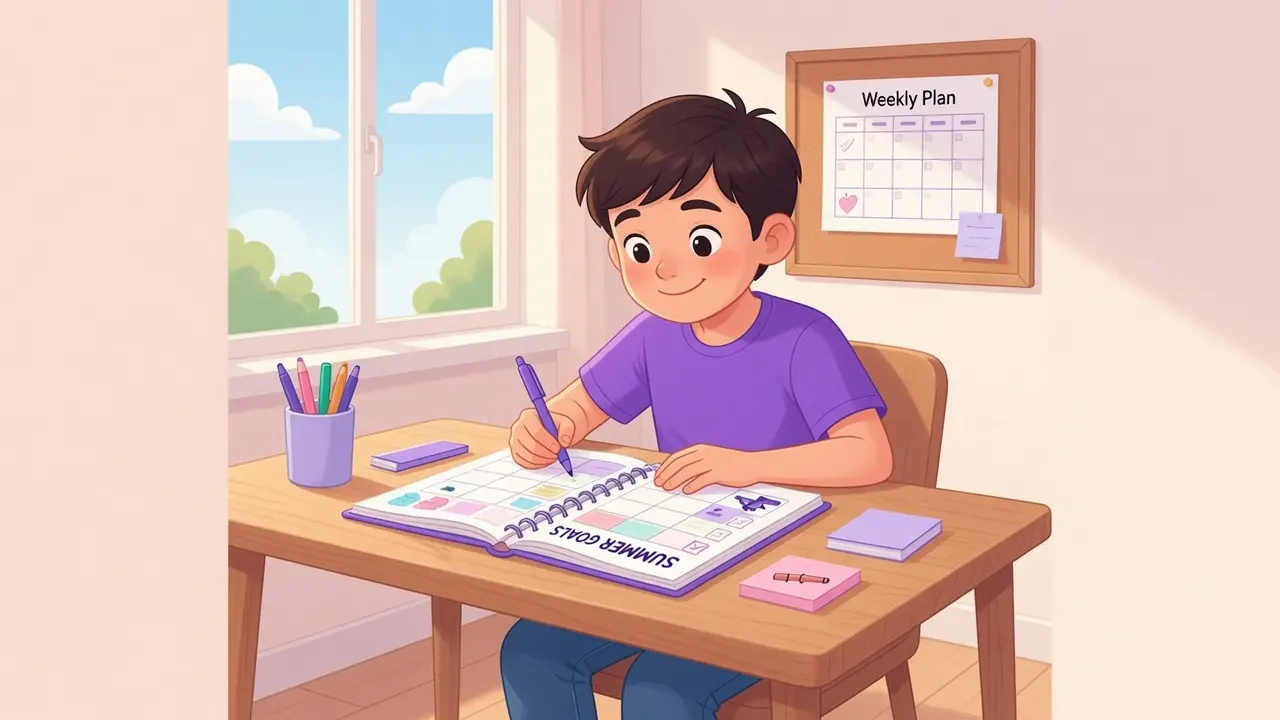
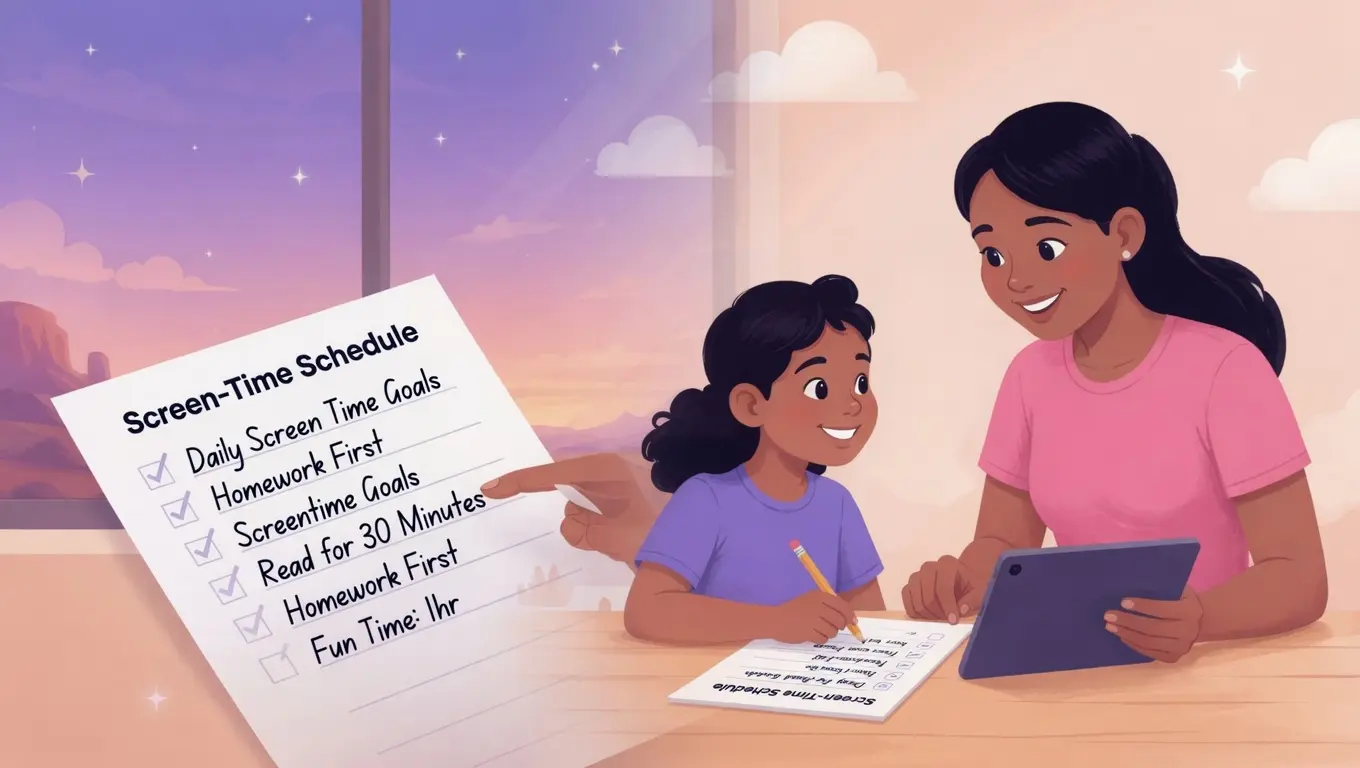
At age eight, children are capable of understanding why limits exist if they are part of the process. Involve your child in the creation of their summer schedule. Ask them what activities they want to prioritize, such as outdoor play, reading, or specific creative projects, and find the natural slots where technology can fit. When they see their own interests reflected in the plan, they are more likely to treat the schedule as a guide they have helped build rather than a mandate imposed upon them.
Components of a Realistic Schedule
A balanced plan addresses the different needs of an 8-year-old throughout the day. Consider these three pillars:
- The Morning Anchor: Dedicate the first part of the day to offline activity. This helps them wake up and engage with the physical world before shifting to a screen. It sets a tone of intentionality.
- The Creative Block: Include a specific time window for digital creation rather than consumption. Whether it is coding, digital art, or movie-making, this ensures their screen time is active and purposeful.
- The Hard Shutdown: Establish a consistent end time for all devices each evening. Move the devices to a central, public location for charging. This creates a clear boundary that makes the transition to sleep easier.
Managing Transitions and Expectations
Transitions between screens and real-world play are often the most difficult moments. Plan for these by giving your child a 10-minute warning before a device session ends. This provides them the time to wrap up a task or reach a save point in a game, which reduces the frustration caused by an abrupt cutoff. Use this transition as a prompt to move into their next activity, perhaps suggesting a specific project or chore that needs attention.
Flexibility and Logical Consequences
Treat the plan as a living document. If you notice your 8-year-old is consistently struggling to stick to the schedule, discuss why. Is the screen-time limit causing more frustration than the fun is worth? Is the activity they are choosing proving to be less engaging than expected? If the plan is not working, adjust it together. If the plan is followed, celebrate the accomplishment as a sign of their growing maturity and ability to self-regulate.
Conclusion
A realistic summer screen-time plan is a powerful tool for helping an 8-year-old navigate the balance between their digital world and their physical life. By focusing on consistency, collaborative planning, and meaningful, active engagement, you equip your child with the skills to manage their own time responsibly and ensure that their summer is filled with diverse and rewarding experiences.