
Daily Summer Chores for an 8-year-old to Do Alone
The Shift Toward Independence at Eight
At eight years old, children are increasingly capable of managing predictable, repetitive tasks without constant supervision. They are transitioning from needing a parent to hover over every step to being able to understand a process, recognize what success looks like, and execute the steps independently. Summer presents the perfect environment for this shift because the pressure of academic schedules is removed, allowing for the slow, intentional practice required to build habit-based independence.
Creating Observable Routines
Independence is not innate; it is built through structure. An 8-year-old needs a clear, observable roadmap to succeed. Vague instructions such as clean your room are overwhelming and ineffective because they lack specific boundaries. Instead, break chores down into granular, binary tasks that they can check off.
Breaking Down Tasks
For a task like setting the dining table, provide a simple checklist:
- Place four placemats.
- Place four sets of silverware.
- Place four glasses on the table.
By focusing on specific actions, you remove the guesswork. The child can easily evaluate if they have completed the task correctly. If a glass is missing, they can see the gap themselves without needing you to point it out. This self-correction is the foundation of genuine competence.
The Role of Visual Checklists
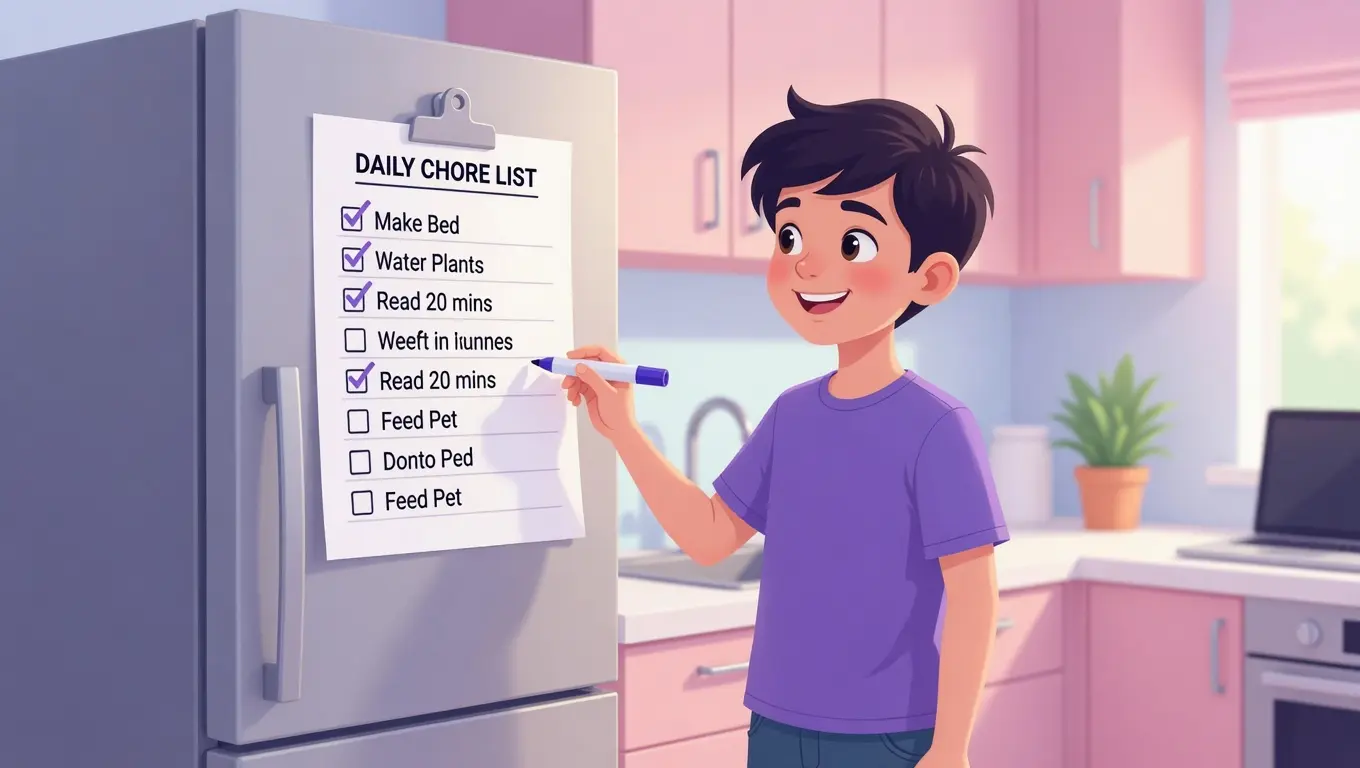
Use a physical chart or a list on the refrigerator. An 8-year-old benefits from seeing their progress throughout the day. When they can cross off items or move magnets from a to-do column to a done column, they receive immediate, non-verbal feedback on their work. This keeps them engaged in their daily chores and reduces the need for you to repeatedly ask, Did you finish your tasks?
Navigating Resistance and Challenges
It is normal for an 8-year-old to protest when faced with daily chores, especially when they would rather be playing or relaxing. Do not frame chores as a moral obligation or a way to be helpful. Frame them as a necessary part of the household system. When resistance occurs, use logic: We all live here, and we all share the work to keep our home functioning. If the chores are not done, the later activities, like a neighborhood bike ride, cannot happen until the work is complete. This is a natural consequence, not a punishment.
Practical Steps for Parents
- Start small. Pick two tasks that are well within their current ability to perform perfectly. Mastery of a few tasks builds the momentum for taking on more complex responsibilities later.
- Demonstrate once, then observe. Show them exactly how to perform the chore, including where items are stored. After that, step back. Allow them to perform the task while you watch quietly, only intervening if a safety concern arises.
- Allow for imperfection. If the bed is made somewhat crooked or the dishes are not stacked perfectly, let it be. If you immediately re-do their work, you signal that their efforts are not good enough. Focus on the fact that the work was completed independently.
- Rotate tasks. Periodically change the chores to keep the experience fresh and to expose your child to different aspects of household maintenance. This keeps the work interesting and ensures they learn a diverse set of practical skills.
Building Long-term Competence
Your goal is to reach a stage where your 8-year-old knows what needs to be done and initiates the work on their own. This requires patience and a willingness to let them struggle slightly as they learn to manage their time and energy. By providing the structure and stepping back to let them operate within it, you help them understand the connection between their personal effort and the smooth functioning of their daily environment.