Daily summer chores for an independent 11-year-old
Establishing the baseline for independence
At 11 years old, children possess the cognitive capacity to understand the relationship between a task and its outcome. They are moving away from needing constant supervision for basic household upkeep. To shift from parent-led tasks to independent ones, you must redefine the chore as an area of ownership rather than a list of commands. Independence at this age is not about them doing what they are told, but about them managing their own workflow to meet household expectations.
Defining ownership versus following instructions
When you ask an 11-year-old to keep the kitchen clean, it is an abstract goal. To foster independence, define exactly what the clean space looks like. Does it mean wiping the counters, loading the dishwasher, or taking out the trash? Once the definition of a completed task is clear, stop providing step-by-step reminders. Let the natural state of the room serve as the feedback mechanism. If the dishes remain in the sink, the kitchen is not yet prepared for the next meal. This allows your child to notice their own progress and adjust their behavior without you acting as the manager.
Creating a visual workflow
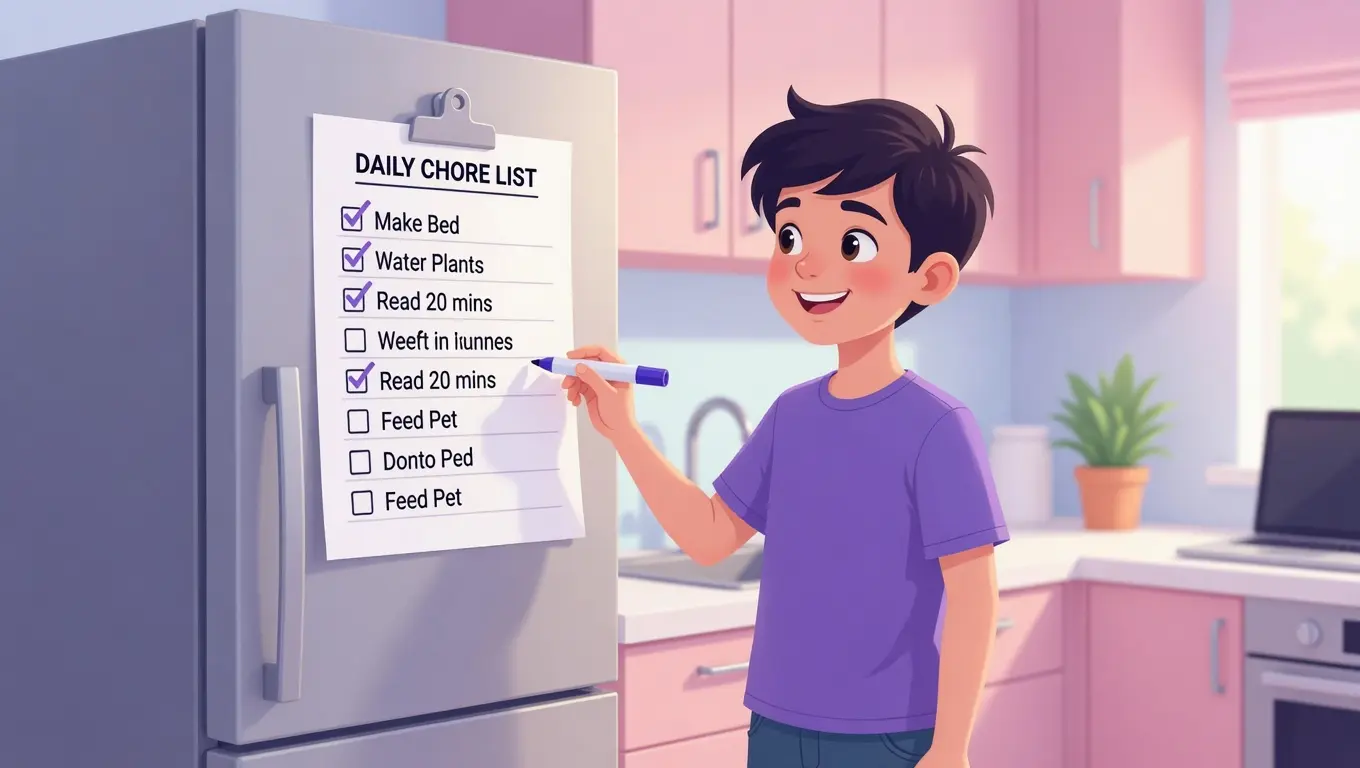
An 11-year-old may struggle with executive function when faced with multiple, non-routine tasks. A physical checklist on the refrigerator or a shared digital list helps them visualize their responsibilities. The key is that the list is their tool, not your reminder. Review the list together at the start of the week, ensuring they understand the expectations for each daily task. During the week, defer questions like "what do I do next?" back to the list. This builds the habit of checking their own schedule.
The role of natural consequences
If the trash is not taken out, the kitchen begins to smell. This is the consequence of the missed chore. Do not rush to fix it for them. When the bin is full, ask them to identify the state of the room and address it. If a chore is consistently missed, hold a short, calm meeting to discuss why. Perhaps the timing interferes with their preferred downtime, or they lack the necessary supplies to do the job well. Collaborative problem-solving ensures they feel invested in the success of the task.
Transitioning to higher-level chores
By age 11, chores should move from simple tasks like picking up toys to more complex responsibilities. Examples include managing the laundry cycle, prepping simple components for dinner, or taking care of yard maintenance tasks like weeding. These tasks require planning and attention to detail. Frame these not as labor, but as vital contributions to the household’s function. They are moving from being a dependent member of the home to being an active partner in its maintenance.
Measuring success through outcomes
Success at this age is measured by the child initiating their tasks without your prompt. If you find yourself reminding them of their responsibilities daily, the system is not yet built for independence. Revisit the expectations and the definition of done. Ensure they have the tools required to complete the work. When you step back and allow them to manage their own time, you signal that you trust their capability. This trust is the foundation for their growing sense of responsibility and reliability.