
Helping Your 14-Year-Old Manage Summer Chores
Fostering Independence Through Summer Responsibility
At 14, teenagers are in a unique developmental position. They are transitioning out of childhood and into a stage where they crave both autonomy and the ability to demonstrate competence. Summer, with its relative freedom from academic schedules, provides an ideal backdrop for parents to shift household chore responsibilities from directed tasks to independently managed expectations.
Shifting the Responsibility Framework
When a 14-year-old takes on summer chores, the parent’s role should transition from direct supervisor to consultant. The goal is to move the child from asking what they should do next to knowing their responsibilities and managing their own schedule.
Start by defining the outcomes rather than the process. For example, instead of telling your teen to clean the kitchen at 10 AM, clarify that the kitchen needs to be clear of dishes and surfaces wiped before they start their leisure time. This allows the teenager to determine the most effective sequence for completing their work, which is a critical skill for their cognitive development.
Setting Clear, Observable Expectations
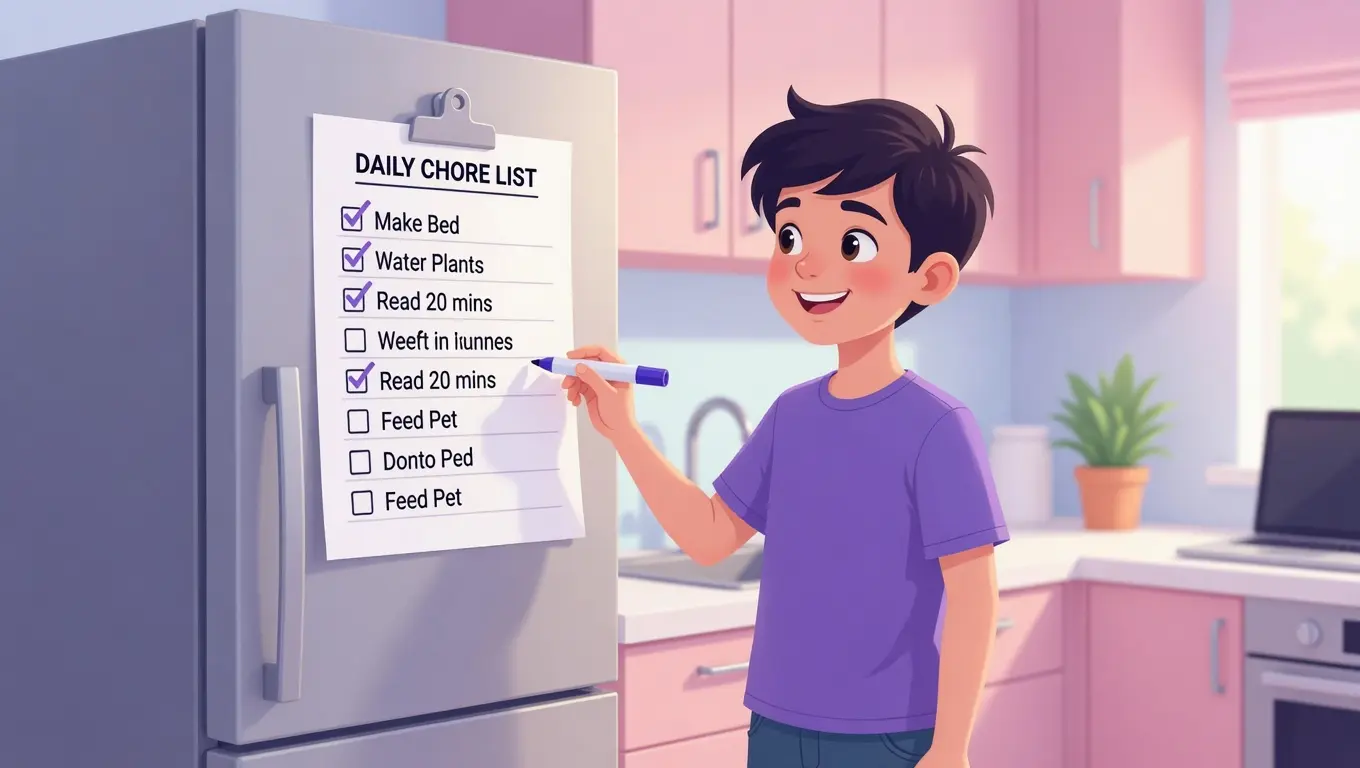
Effective delegation relies on clarity. If a teen is responsible for lawn maintenance or general household upkeep, create a simple checklist that outlines the standard of completion. Use objective measures whenever possible. A lawn should be mowed to a specific height, or trash bins should be at the curb by a certain day. These binary, observable criteria remove ambiguity and prevent unnecessary friction between parent and teen.
The Role of Natural Consequences
As your teen takes over these duties, they will likely stumble. They may forget to empty the dishwasher or fail to complete a chore until the last minute. This is expected and provides a valuable learning opportunity. Resist the urge to intervene or criticize. Instead, focus on the natural consequences of the oversight. If the kitchen is not clean, they cannot cook their lunch until it is finished. When the teen manages these tasks independently, they learn that their actions have direct effects on their own quality of life, which is a far more powerful teacher than a parental reminder.
Collaborative Problem Solving
If a teen is consistently struggling with a specific task, approach it as a collaborative puzzle. Ask them to identify what parts of the process are difficult or time-consuming. They might suggest a better way to organize the task or request a different schedule. By listening to their perspective, you affirm their growing agency and encourage them to develop their own systems of work, which will serve them well as they move toward the greater responsibilities of young adulthood. This approach respects their developmental stage and prepares them for the self-discipline required in school and beyond.