
Indoor Learning for an Older Elementary Summer
When summer temperatures climb, staying indoors often becomes a necessity rather than a choice. For parents of an older elementary student, this transition can feel daunting. You want to avoid the trap of mindless digital consumption while ensuring your child remains intellectually engaged. This age group possesses the cognitive maturity to handle complex tasks, sustain focus for longer periods, and engage in logical inquiry. Instead of viewing the heat as a hurdle, consider these indoor hours as prime time for project-based learning.
The Engineering Challenge: Structural Integrity
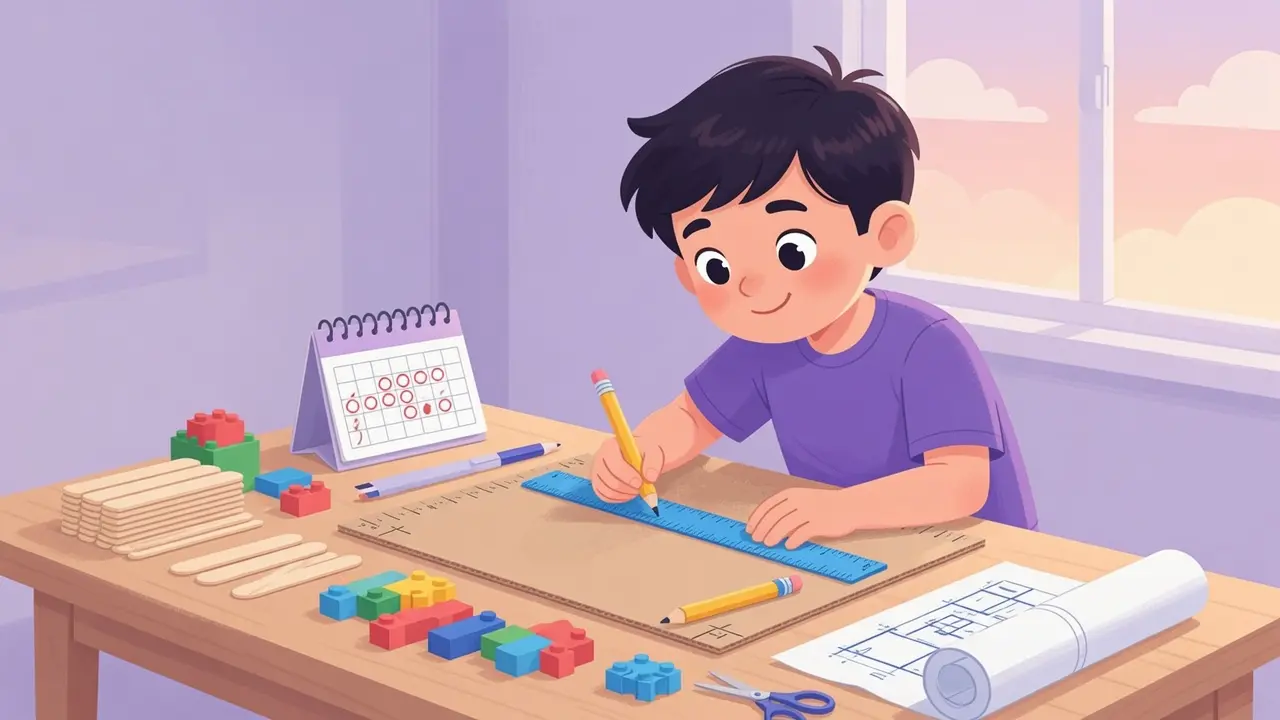
Older elementary students have the dexterity and spatial awareness to move beyond simple block towers. Challenge your child to build a bridge or a tower that can support a specific weight using only household materials like index cards, tape, and drinking straws. The goal here is not the final structure but the process of failure and iteration.
Ask your child to sketch a plan before they start. If the structure collapses under pressure, work with them to analyze the cause. Did the joints fail? Was the base unstable? By focusing on the physics of the collapse, you turn a frustrating moment into a lesson in structural engineering. This requires no expensive kits, just a shift in focus from the product to the design process.
Scientific Observation: Household Chemistry
Instead of pre-packaged kits, turn to your kitchen to explore chemical reactions. Older elementary students can practice careful measurement and observation. Investigate the factors that affect the speed of crystal growth using different solutions or explore the properties of non-Newtonian fluids using cornstarch and water.
Encourage your child to record their observations in a structured way. Have them formulate a hypothesis about what will happen if they change a variable, such as the temperature of the water or the ratio of ingredients. This approach fosters a scientific mindset, teaching them to value systematic observation over guessing.
Logical Puzzles and Strategic Thinking
Escape the boredom of repetitive screen games by introducing complex board games or logic puzzles that require deep strategic thinking. Games like chess, Go, or even sophisticated card games force children to anticipate their opponent's moves and adjust their strategy accordingly.
If you prefer solo work, provide a variety of high-quality logic puzzles or brain teasers. The value lies in the struggle to solve a problem that is not immediately intuitive. When they hit a wall, offer questions that help them see the underlying structure of the puzzle rather than providing the answer. This helps them build the resilience necessary for tackling difficult academic concepts later on.
Creative Documentation and Narrative Construction
Summer is an ideal time to document interests without the pressure of academic grading. Suggest that your child start a project journal where they track their experiments, designs, or observations. They might write a guide on how to build the bridge they designed earlier or create a detailed report on the results of their kitchen chemistry experiments.
This act of translation, moving from an experience to a written or drawn record, clarifies their own thinking. It allows them to refine their ideas and articulate the why behind their discoveries. By treating their projects as a subject of formal study, you reinforce the importance of intellectual work in their daily lives.
Concluding Thoughts
These activities rely on the inherent desire of an older elementary child to understand the mechanics of their world. By providing the tools and the space to explore, you allow them to direct their own learning. Summer indoors does not have to be a period of stagnation. It can be a vibrant season of inquiry where your child develops the capacity to think critically, iterate on their ideas, and find satisfaction in the work they create.